
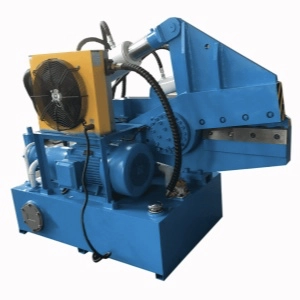
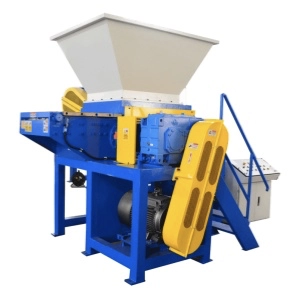
Scrap Metal Shredder
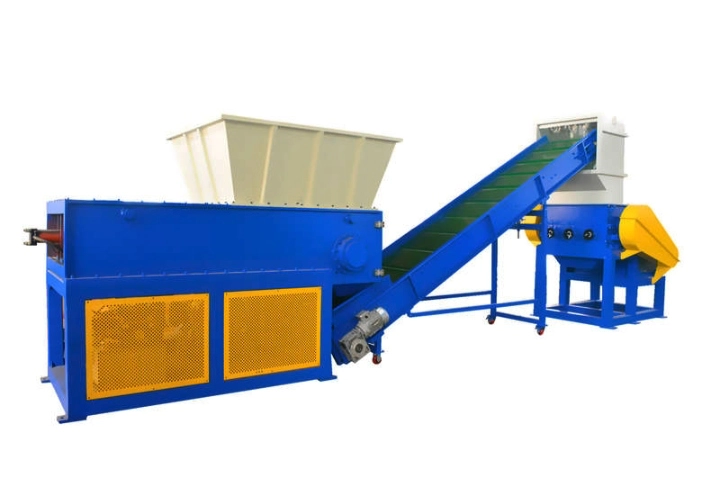
Product Features(T Series)
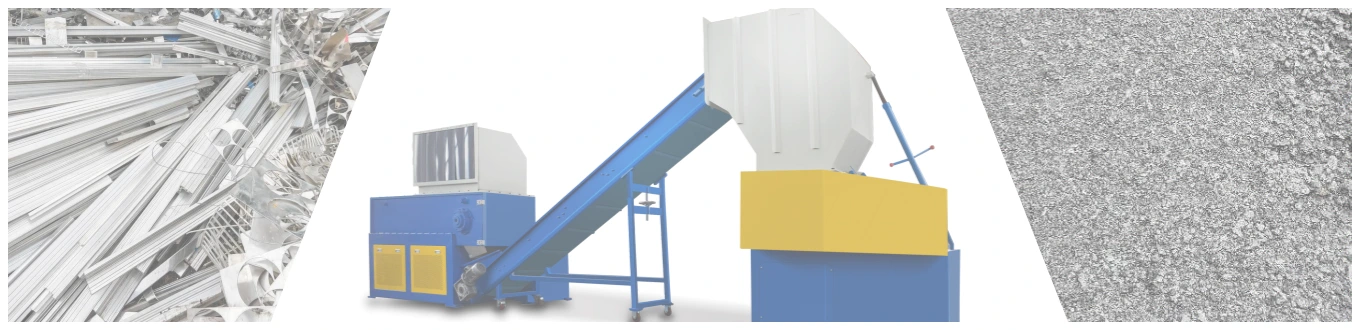
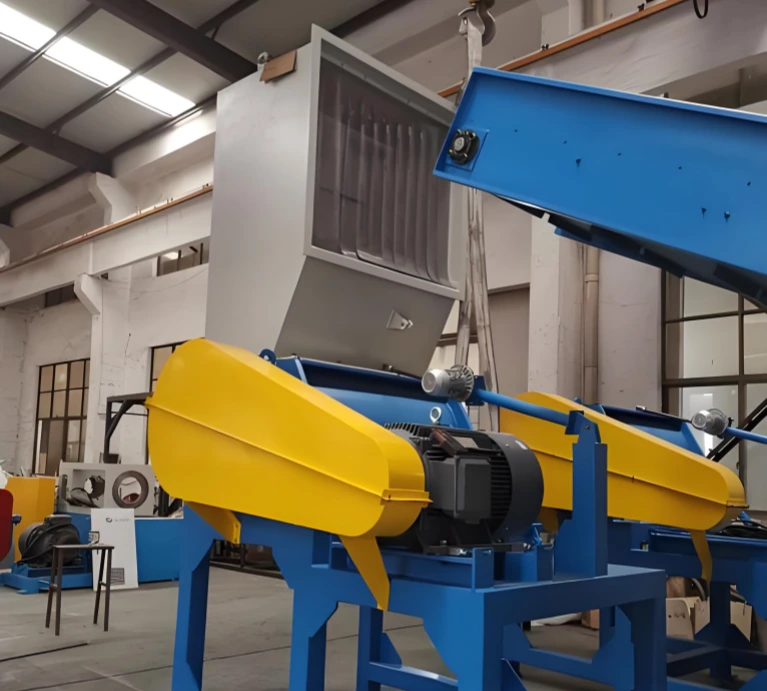
TITAN T series shredder is available in two configurations: the TITAN Dual-Shaft Shredder (TDS) and the TITAN Single-Shaft Shredder (TSS), each engineered to meet distinct operational requirements and application scenarios.
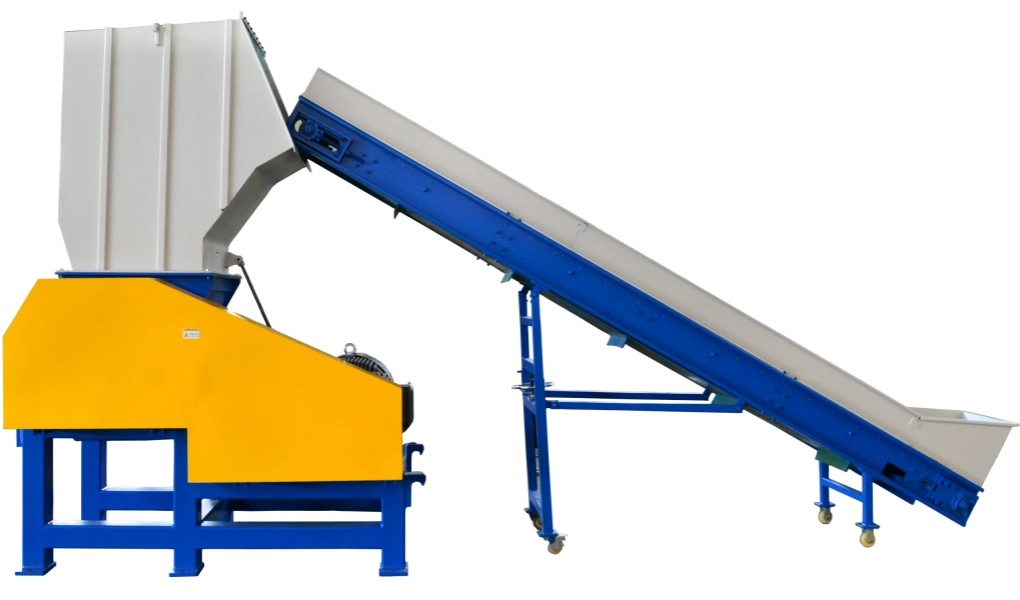
High-Efficiency Cutting Tools
Alloy steel moving and fixed blades ensure efficient shredding and extended service life.
Reinforced Anti-Torsion Structure
Thickened plate framework withstands high torque without deformation for stable operation.
Intelligent Control & Protection
PLC auto-control with forward, reverse, and overload auto-reverse functions for safe operation.
High-Torque Low-Noise Operation
Low speed, high torque, and quiet performance with minimal maintenance requirements.
Dual-Shaft Series (TDS)
Handles bulky and tough materials like vehicle shells, industrial waste, e-waste, plastic/metal containers, and wood.
Single-Shaft Series (TSS)
Produces finer output for downstream processing (e.g., tangled turnings), compatible with Y83 briquetting presses to enhance density and economic value.
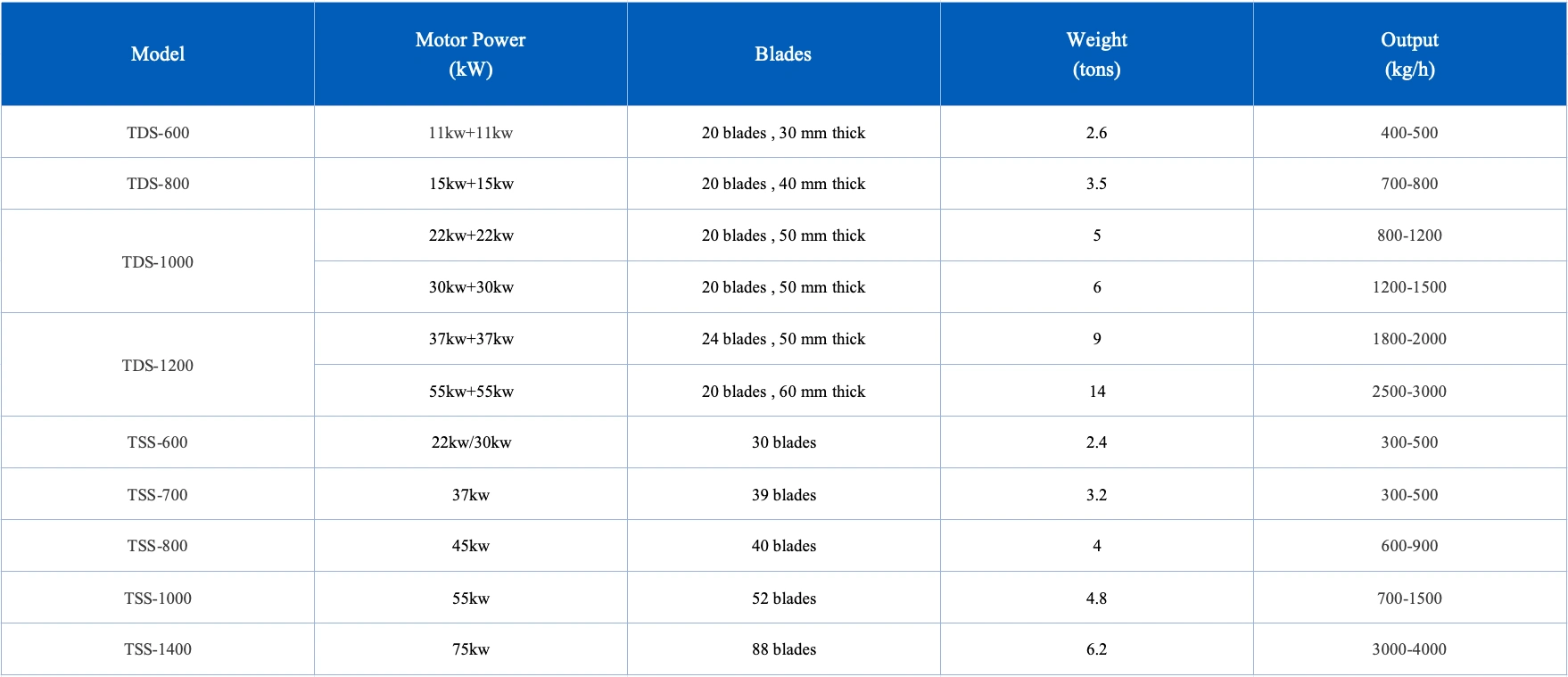
Technical Parameters
Applicable Materials & Scrap Types
TITAN metal shredders are designed to handle a wide range of materials, from loose non-metal waste to light and processed metal scrap, ensuring efficient size reduction and material liberation.
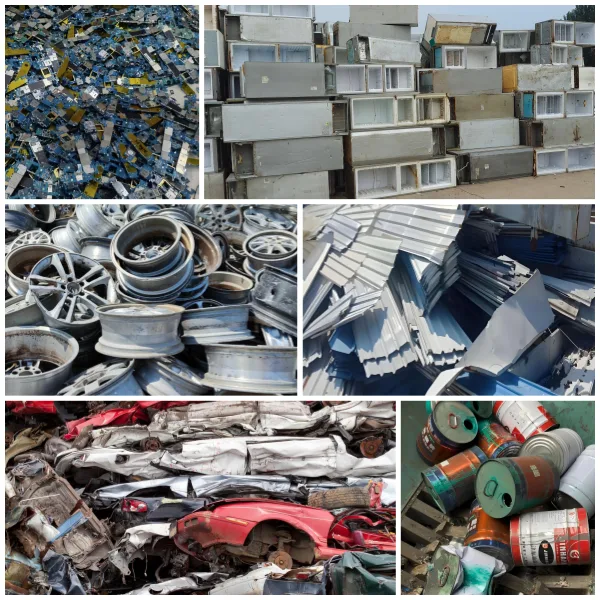
Non-Metallic Solid Waste
Various types of bulky or rigid non-metal waste generated from municipal recycling, manufacturing, and packaging industries. A metal shredder can efficiently reduce the size of these materials, improving handling, storage, and pre-processing for recycling or disposal, especially when mixed with metal components.
e.g., e-waste (electronic waste), plastic products, wooden pallets, waste tires.
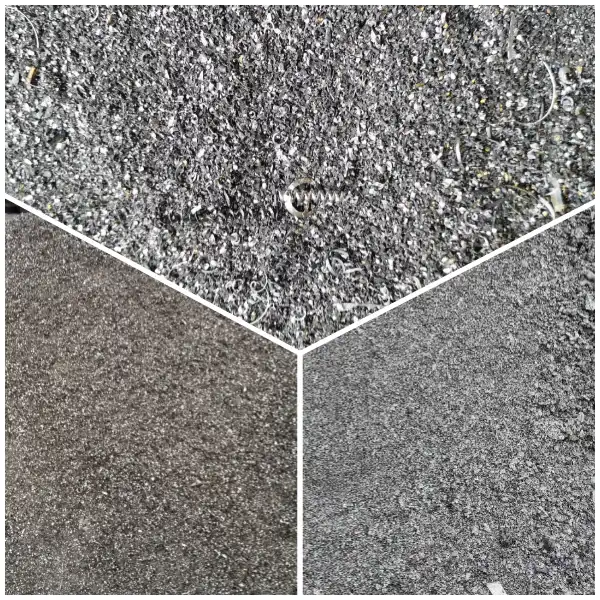
Processed Metal Scrap
Small-sized metal scrap generated from machining and metalworking processes. These materials often have irregular shapes and may tangle easily, making shredding an effective way to achieve uniform particle size, improve bulk density, and enhance downstream processing such as briquetting or melting.
e.g., lathe turnings, CNC chips, drilling swarf, milling chips.
Light & Medium Metallic Materials
Thin-walled and moderately sized metal products or scrap commonly generated from daily recycling and light industrial sources. Shredding helps break down these materials into smaller, uniform pieces, increasing density, improving separation efficiency, and optimizing furnace charging performance.
e.g., bicycles, paint cans, color steel sheets, metal doors and window profiles.
Economic Benefits of Scrap Metal Shredding
Enhanced Scrap Value
Shredding increases the density and uniformity of scrap metal, making it more attractive to buyers and smelters. Clean, size-consistent material often commands higher market prices. When combined with a briquetting system such as the Y83 press, loose scrap can be further compacted into high-density blocks, maximizing resale value and reducing material loss.
Improved Smelting Efficiency
Uniform shredded scrap allows for better furnace loading and more consistent melting performance. The optimized size and structure enhance heat distribution, shorten melting cycles, and reduce energy consumption. This directly lowers operational costs while increasing overall throughput in downstream processing.
Reduced Logistics & Handling Costs
By significantly reducing the volume of bulky scrap, shredding minimizes storage space requirements and improves transport efficiency. More material can be loaded per shipment, cutting down on transportation frequency and costs. In addition, compact and uniform scrap is easier to handle, stack, and manage within recycling facilities.
How the Scrap Metal Shredder Works
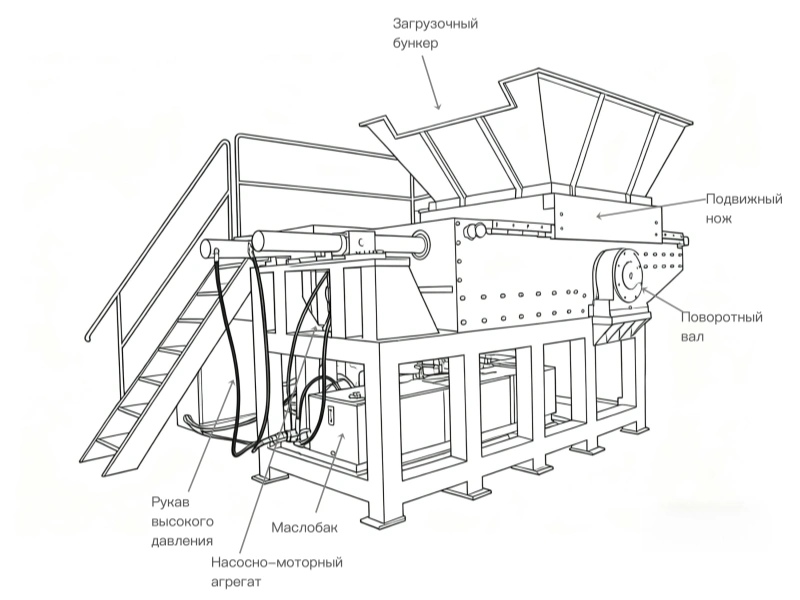
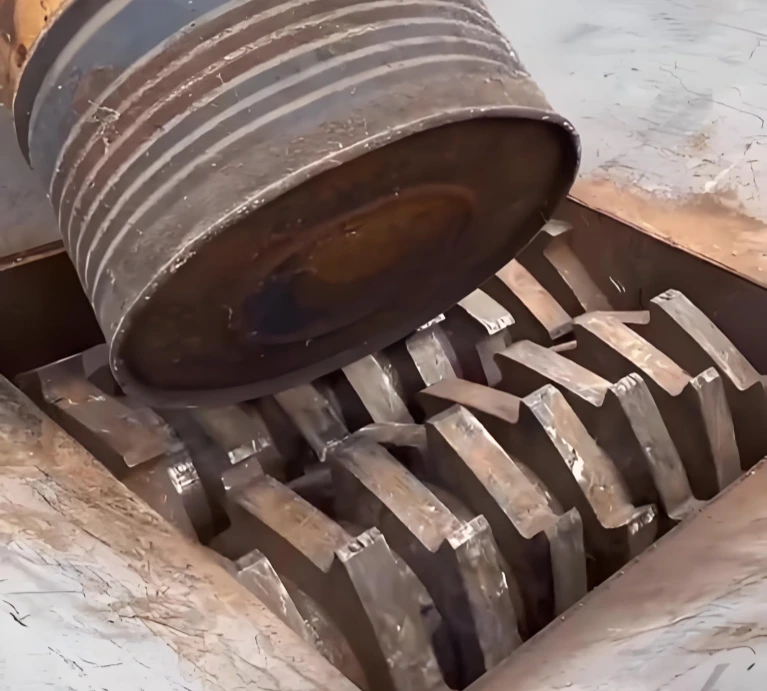
TITAN shredders use high-torque, low-speed rotors to tear and crush metal scrap through powerful shear and compression forces.
The process includes:
Feeding
Light scrap is loaded into the shredder’s hopper.
Shredding
Rotating blades cut, tear, and compress the scrap into uniform fragments.
Discharging
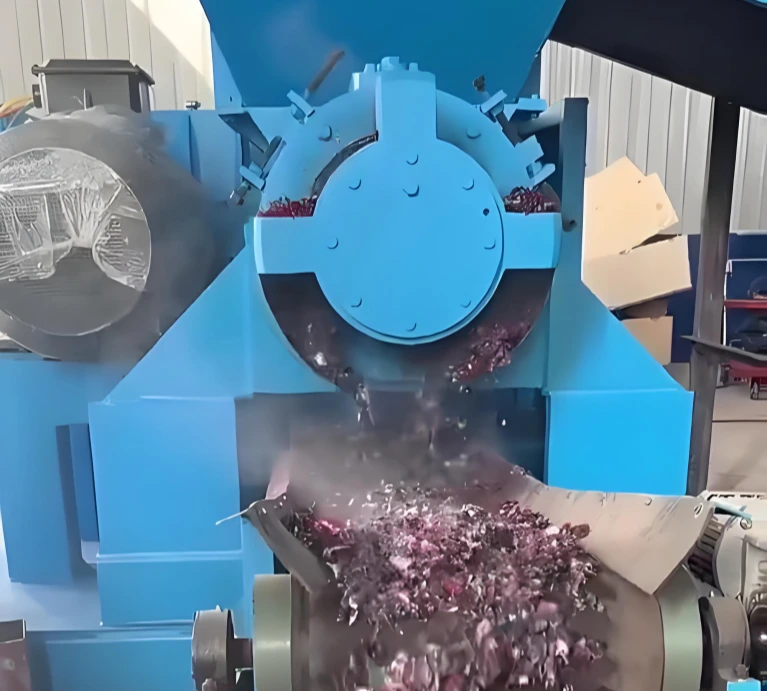
The processed scrap is discharged through a conveyor for sorting or baling.
This ensures consistent output size, ideal for baling, melting, or smelting in downstream recycling processes.
Working video
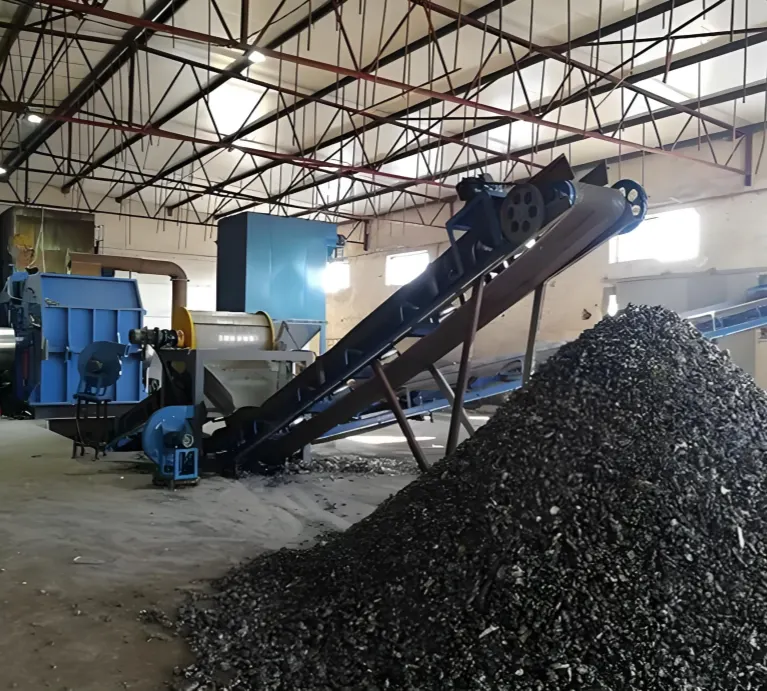
The scrap metal shredder is widely used in metal recycling plants, scrap yards and end-of-life product recycling lines. It is commonly integrated into complete metal recycling systems with balers, shears and sorting equipment.
Working Scenes & Project Cases
FAQs About Scrap Metal Shredder
Mixed ferrous and non-ferrous scrap, light scrap metal and dismantled metal products within capacity limits.
Output size can be adjusted by screen size and cutter configuration.