Products

Metal Recycling Equipment

TITAN provides equipment for briquetting, baling, shearing, and shredding scrap metal, covering different material conditions such as metal chips, light-gauge scrap, long metal sections, and bulky or irregular scrap. Choose the right equipment and processing method based on scrap form, throughput, and target output.

Four Core Equipment Types for Different Scrap Conditions

Each type of equipment solves a different processing problem. Metal chips need densification, light-gauge scrap needs volume reduction, long metal needs to be cut shorter, and bulky or irregular scrap may require further size reduction.

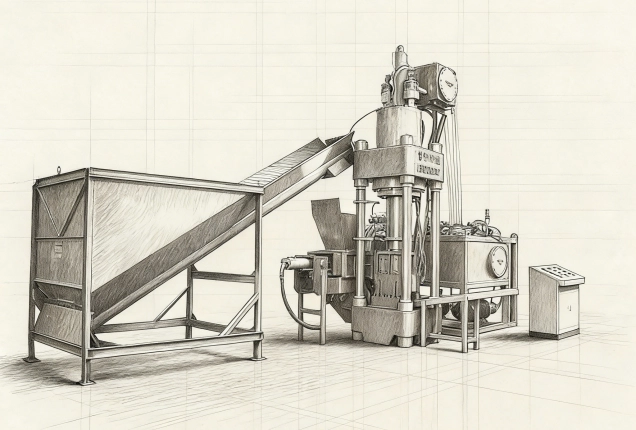
Metal Briquetting Machine

Metal Briquetting Machine

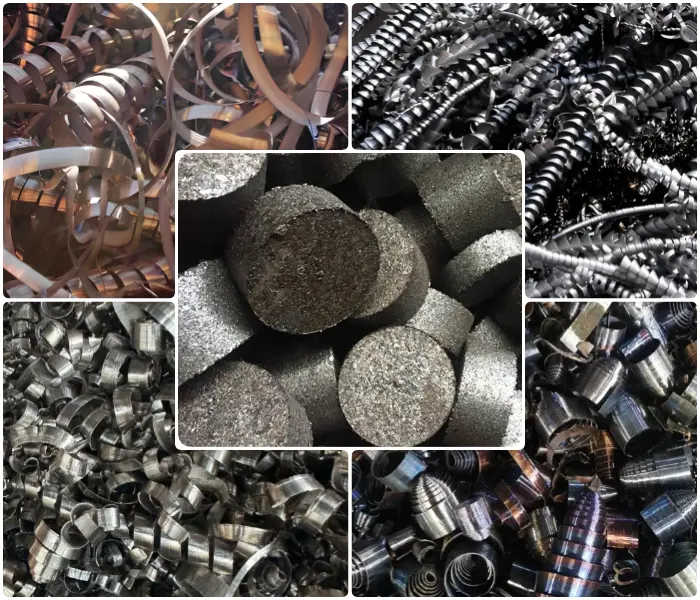
Aluminum chips, copper chips, iron chips, cast iron chips, stainless steel chips, and other machining chips that are granular, short, or able to feed consistently.

Loose metal chipsHigh-density, uniform briquettes

Core Process
Uses high-pressure cold compaction to densify and form loose metal chips into briquettes. For chips containing cutting fluid, part of the liquid can be squeezed out and collected during pressing.

Main Problems Addressed

  • Low bulk density
  • Excessive storage-space requirements
  • Low handling and transport efficiency
  • Difficulty recycling chips with residual liquid
View Metal Briquetting Machine →
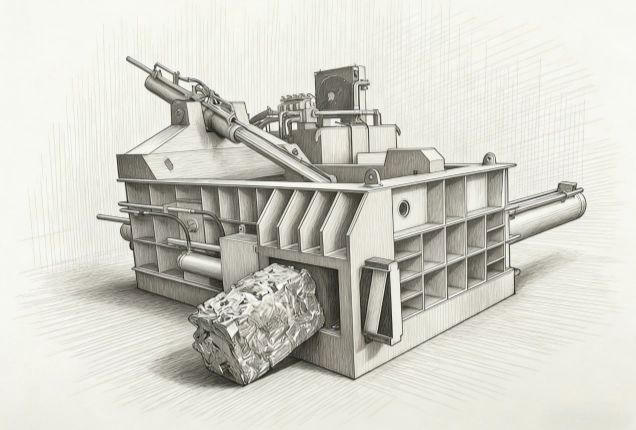
Scrap Metal Baler

Scrap Metal Baler

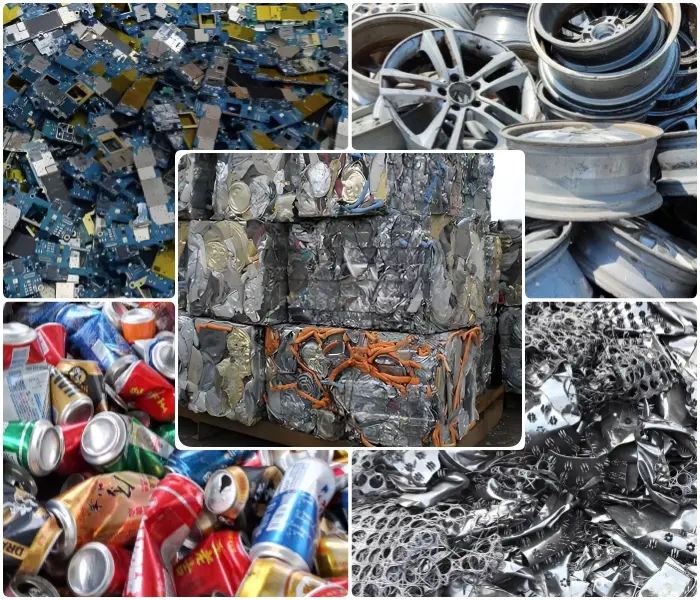
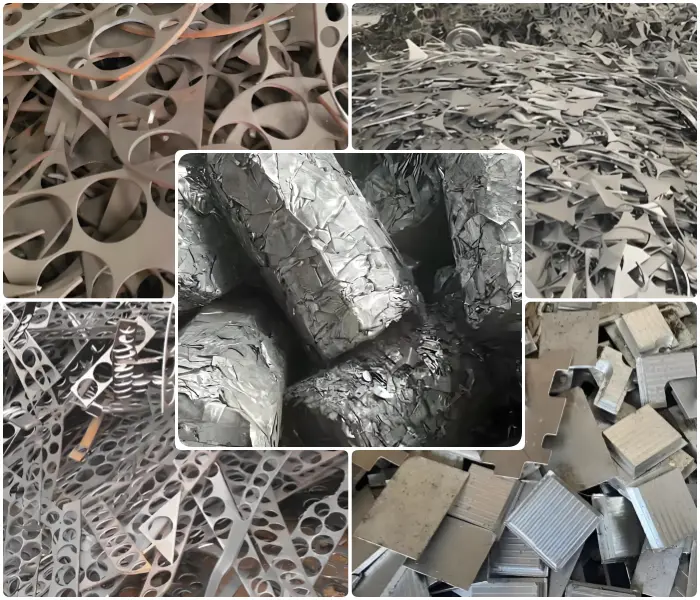
Light-gauge scrap metal, sheet offcuts, sheet metal, scrap steel and iron, and other bulky, loosely accumulated metal scrap.

Loose scrap metalCompact, uniform bales

Core Process
Uses hydraulic pressure to compress loose scrap metal and form compact, uniform bales.

Main Problems Addressed

  • Loose, bulky scrap taking up too much space
  • Irregular stacking
  • Low truck-loading efficiency
  • Difficult handling and transfer
View Scrap Metal Baler →
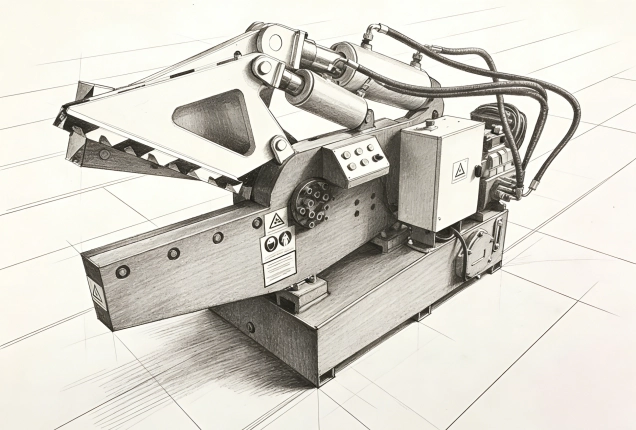
Scrap Metal Shear

Scrap Metal Shear

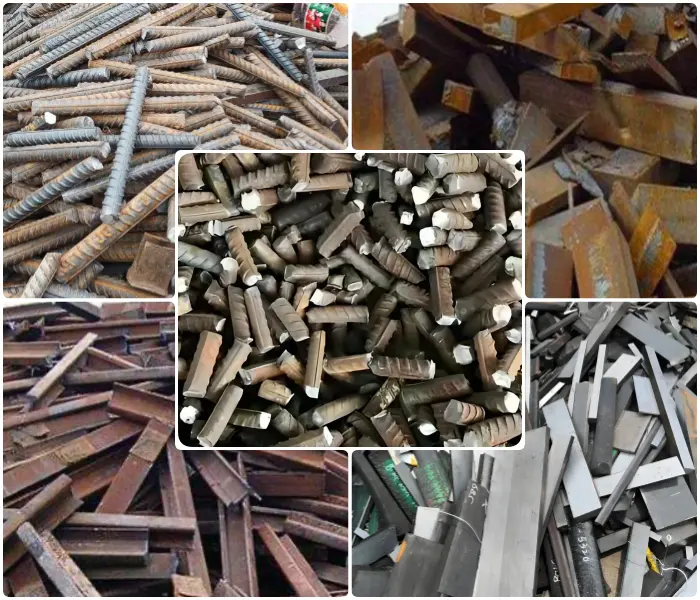
Round bar, square bar, rebar, structural sections, and other long metal scrap that falls within the processing capability of TITAN Q43 alligator shears and needs to be cut to a shorter length.

Long metalShorter cut pieces

Core Process
Hydraulically driven blades perform cold shearing to cut metal into shorter pieces.

Main Problems Addressed

  • Feed material is too long
  • Difficult loading or transfer
  • Individual pieces are too large for downstream processing
  • A more suitable length is required for the next process

Application Boundary
The allowable cross-section, thickness, and dimensions must be assessed against the shearing force, blade opening, and actual condition of the material.

View Scrap Metal Shear →
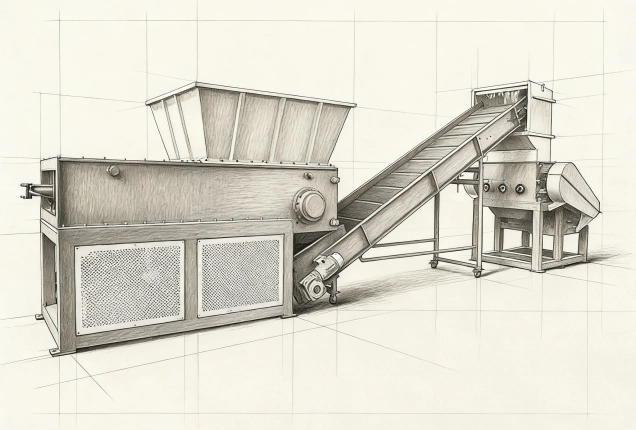
Scrap Metal Shredder

Scrap Metal Shredder

Sheet metal, metal drums, light-gauge steel scrap, discarded metal components, and other scrap that is bulky, irregular in shape, or requires further size reduction.

Bulky or irregular scrap metalSmaller, more uniform shredded material

Core Process
A cutter system compresses, tears, and shears the material, progressively breaking the scrap into smaller pieces.

Main Problems Addressed

  • Large individual piece size
  • Irregular shape
  • Difficult downstream conveying or processing
  • Need for further size reduction and a more uniform output
View Scrap Metal Shredder →

Start with the Scrap Condition, Then Choose the Equipment

The same metal can require completely different processing methods in different forms. In addition to material type, consider the scrap length, volume, degree of tangling, and target output. Identifying the current scrap condition first makes it easier to determine the right equipment direction.

First Consider

Metal Briquetting Machine

Typical Condition: Small machining chips such as iron chips, aluminum chips, copper chips, cast iron chips, and stainless steel chips.

Why: These materials usually do not require further size reduction. The main task is to increase density and form the loose chips into uniform briquettes.

Metal chips are too loose → Briquetting
View Metal Briquetting Machine →
First Consider

Assess whether pretreatment is needed before briquetting

Typical Condition: Long curled turnings, continuous string-like chips, and tangled bundles generated during turning.

Why: Long or tangled chips are more likely to bridge and cause unstable feeding. Depending on the actual chip form and required throughput, a pre-compaction mechanism, shredding pretreatment, or another feeding method may be used to improve feeding conditions.

View Metal Chip Recycling Solution →
First Consider

Scrap Metal Baler

Typical Condition: Sheet metal, thin sheet offcuts, light steel scrap, and other metal scrap that occupies a large volume while remaining loosely accumulated.

Why: If the main goal is to reduce occupied space and turn loose scrap into uniform bales that are easier to stack, handle, and transport, baling is usually the more direct approach.

Light-gauge scrap takes up too much space → Baling
View Scrap Metal Baler →
First Consider

Scrap Metal Shear

Typical Condition: Round bar, square bar, rebar, and other metal scrap that needs to be shortened.

Why: The main issue with this type of scrap is length rather than bulk density. Changing the length and individual piece size through shearing is generally more appropriate than compression or shredding.

Application Boundary: Whether the material is suitable for a TITAN Q43 alligator shear depends on its cross-section, thickness, dimensions, actual condition, and the capability of the selected machine.

Metal scrap is too long → Shearing
View Scrap Metal Shear →
First Consider

Scrap Metal Shredder

Typical Condition: Metal drums, sheet metal, light-gauge steel scrap, discarded metal components, and other irregular scrap.

Why: When the objective is not simply to compress or shorten the scrap, but to change its overall size and form into smaller, more uniform pieces, shredding is the more suitable processing method.

Scrap is too large or irregular → Shredding
View Scrap Metal Shredder →
First Consider

Combined Processing Route

Why: Projects involving long material, tangled chips, bulky irregular pieces, or multiple processing stages require the complete processing route to be defined first. Pretreatment, shearing, shredding, baling, briquetting, and conveying equipment can then be combined as required by the actual project.

Scrap conditions are complex → Define a combined processing route based on the actual operating conditions
View All Scrap Metal Recycling Solutions →

Different Processing Methods Change Different Scrap Characteristics

Briquetting, baling, shearing, and shredding all change the condition of scrap, but they solve different problems. The key to choosing the right method is to determine what actually needs to change: density, occupied volume, length, or the overall size and form of the material.

Briquetting | Increase Density

For metal chips, high-pressure compression reduces the voids between particles and forms loose chips into high-density briquettes.

Low bulk densityHigh-density, uniform briquettes
Increase Density

Baling | Reduce Bulk Volume

For light-gauge, bulky scrap that takes up significant space, hydraulic compression forms the loose material into compact bales.

Loose, bulky scrapCompact, uniform bales
Reduce Bulk Volume

Shearing | Shorten Material Length

For long metal within the capability range of TITAN Q43 alligator shears, cold shearing produces shorter lengths that are better suited to downstream processing.

Long materialShorter cut pieces
Shorten Material Length

Shredding | Change Overall Size and Form

For bulky or irregular scrap metal, compression, tearing, and shearing reduce the material into smaller, more uniform pieces.

Large and irregularSmaller and more uniform
Change Overall Size and Form

Once the Equipment Type Is Clear, Choose the Right Structure and Model

Choosing between briquetting, baling, shearing, and shredding answers the question of **which processing method to use**. Once you move into specific equipment selection, however, each product requires a different set of factors to be considered. Start by defining three basic conditions: What material is going in? How much needs to be processed? What output do you need? Then use the operating principle of the selected equipment to determine the appropriate structure, model, and configuration.

Metal Briquetting Machine

Stable feeding, compaction, and briquette formation depend closely on chip form and liquid condition. Even at the same throughput, different metal chip conditions may require different machine structures and configurations.

  • Metal chip material
  • Chip length, particle size, and degree of tangling
  • Oil, water, and cutting-fluid condition
  • Required hourly or daily throughput
  • Required briquette size and final form
  • Vertical or horizontal configuration
  • Whether pretreatment, automatic feeding, or liquid collection is required

Scrap Metal Baler

A baler must allow scrap to enter the compression chamber consistently and form suitable bales under an appropriate combination of pressure, chamber size, and operating cycle. Higher pressure alone does not make a machine a better fit.

  • Scrap type and degree of looseness
  • Individual piece size and compatibility with the compression chamber
  • Required hourly or daily throughput
  • Required bale size and density
  • Feeding method
  • Bale discharge method
  • Automation and conveying configuration

Scrap Metal Shear

For a TITAN Q43 alligator shear, first confirm that the material cross-section and dimensions fall within the machine's processing capability. The appropriate model can then be selected according to the target length and required throughput.

  • Metal type
  • Cross-section shape
  • Cross-section dimensions and thickness
  • Original material length
  • Required cut length
  • Required hourly throughput
  • Required shearing force, blade opening, and shearing frequency

Scrap Metal Shredder

Different scrap materials place different demands on the cutter system, shaft arrangement, and drive system. Feed size, required throughput, and target output further determine the appropriate machine structure and configuration.

  • Scrap type and material structure
  • Maximum feed size
  • Material thickness, form, and processing difficulty
  • Required throughput
  • Required output size
  • Single-shaft or twin-shaft configuration
  • Whether conveying, screening, or downstream processing equipment is required

Find a Processing Solution by Scrap Condition and Production Scenario

If you already know what scrap you are handling but are not yet sure about the complete processing route, start with the scrap condition and production scenario. This makes it easier to understand the processing logic from the original scrap to the required output.

Heavy Scrap Processing

Heavy Scrap Processing

For scrap whose size, length, or individual-piece condition makes direct transport or downstream processing difficult, determine the appropriate size-processing and recycling route according to the actual material dimensions, required throughput, and target output.

View Heavy Scrap Recycling Solution →

Not Sure Which Equipment Fits Your Scrap?

Tell us what scrap you are processing and what problem you need to solve. TITAN can help identify the appropriate processing method and equipment direction based on your actual requirements.

Find the Right Equipment