Definition of a Metal Briquetting Machine
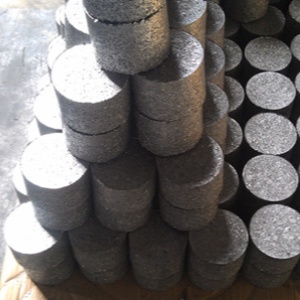
A metal briquetting machine—also known as a metal chip press—is a mechanical device that uses hydraulic or diesel power to cold-press metal machining scraps such as cast iron chips, steel turnings, aluminum swarf, and copper shavings into dense, solid briquettes. Its core function is to "turn waste into treasure" by transforming troublesome metal refuse into valuable, recyclable resources. It is widely used across industries including machining, foundry operations, metallurgy, and secondary resource recovery.
Far more than a simple compaction tool, a metal briquetting machine is a highly efficient resource recovery system that integrates mechanical engineering, fluid power dynamics, and intelligent automation. It successfully converts problematic industrial waste into high-value commodity feedstock, making it an indispensable strategic asset for manufacturing enterprises striving for cost reduction, efficiency gains, energy conservation, environmental compliance, and workplace safety.
Components of a Metal Briquetting Machine
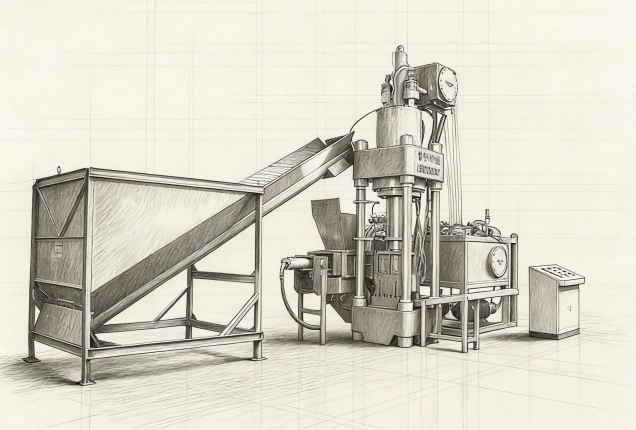
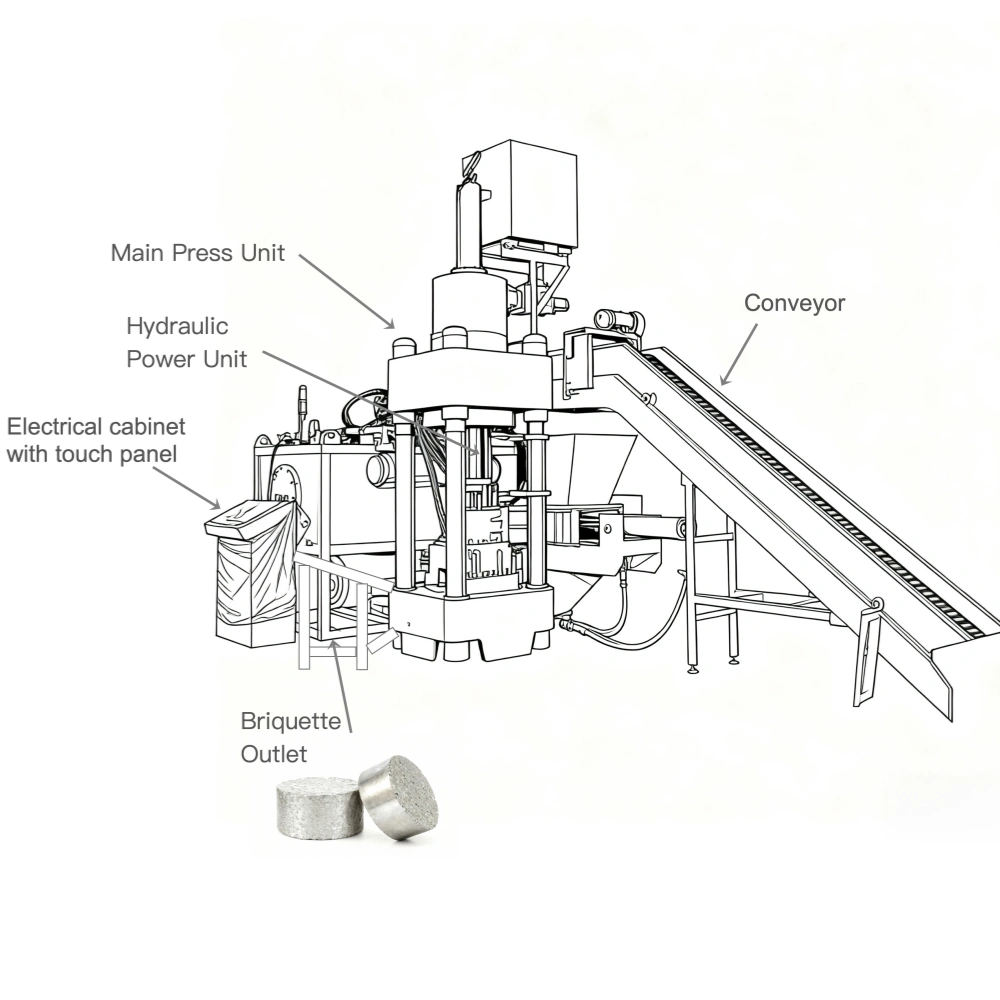
A standard metal briquetting machine typically consists of the following key components:
Main Frame
The main frame serves as the "skeletal system" or "foundation" of the briquetting machine. It is not only the mounting platform for all other components but also the core structural element that withstands and transmits the immense counterforce generated during compression. The quality of its design directly determines the equipment's stability, precision, service life, and overall safety.
Hydraulic System
This is the "heart" of the briquetting machine. It comprises hydraulic pumps, high-pressure cylinders (main and pre-press cylinders), hydraulic valves, an oil tank, and a cooling system. The stability and reliability of this system depend on the quality of each individual component and the perfect synergy among them. An excellent hydraulic system operates smoothly, powerfully, quietly, and with manageable temperature rise. It is the fundamental guarantee that the machine can perform under long-term, high-intensity conditions without failure. In daily maintenance, keeping the hydraulic oil clean and performing regular oil changes are paramount.
Power System
The power system is the fundamental energy conversion unit of the machine. Its core task is clear and defined: to convert input electrical energy (or other forms of energy) into the mechanical energy required by the hydraulic system, thereby providing a continuous, stable, and robust power source for the entire equipment.
Mold Chamber and Press Head
The mold chamber determines the final shape and dimensions of the briquette and is typically made of high-strength, wear-resistant steel. The press head (piston head) works in precise coordination with the mold chamber to apply the necessary pressure.
Electrical Control System
Acting as the "brain" of the equipment, this system is centered around a PLC (Programmable Logic Controller). It manages the sequential actions of the entire compression cycle and features essential safeguards including overload protection, oil temperature monitoring, and alarm functions. Modern advanced models are also equipped with a Touchscreen Human-Machine Interface (HMI) for intuitive parameter setting and real-time operational monitoring.
Oil Collection System
The oil collection system is a critical subsystem that enables the briquetting machine to deliver both environmental and economic value—its importance is in no way secondary to the main compression system. Its core mission is not to generate pressure, but rather to efficiently and cleanly separate and collect the cutting fluids (or lubricating oils) squeezed out of the metal chips during the compaction process.
Types of Metal Briquetting Machines
The most common types of metal briquetting machines are Vertical Briquetting Machines and Horizontal Briquetting Machines.
Vertical Briquetting Machine
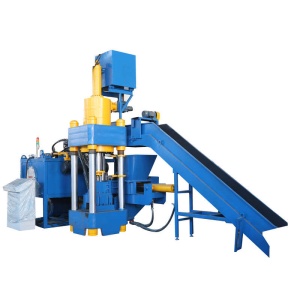
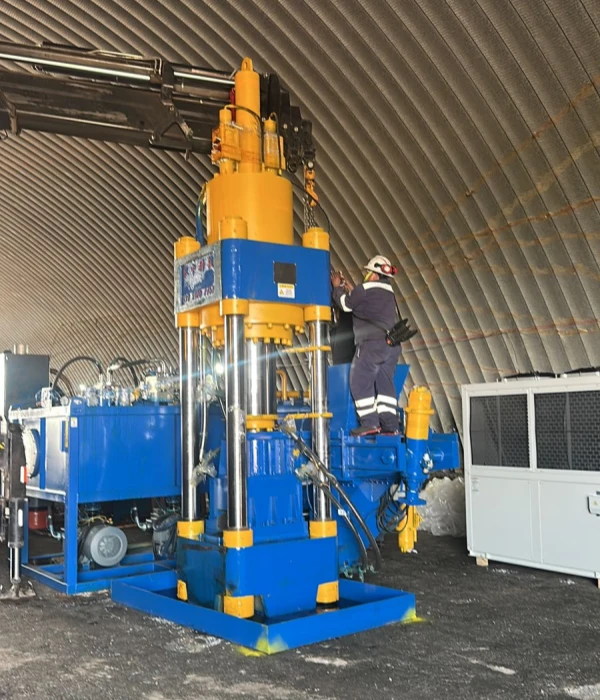
In a vertical briquetting machine, metal chips are fed into the hopper located at the top of the machine. The piston rod of the main cylinder moves vertically downward, compressing the chips into the mold chamber below. Once formed into a dense briquette, the finished block is typically ejected from the bottom or allowed to drop out by gravity.
This type of briquetting machine generally features a taller overall profile but occupies a relatively smaller footprint. From a cost perspective, its structure is comparatively simple, resulting in lower manufacturing costs and a more affordable price point than horizontal models of equivalent tonnage. In terms of operation, it is extremely user-friendly, facilitating both manual feeding and routine maintenance.
Consequently, the vertical briquetting machine is exceptionally well-suited for small to medium-sized machine shops. Such workshops typically generate a moderate daily volume of metal scrap—predominantly short chips such as milling swarf, drilling turnings, and stamping offcuts. While operating within tighter budget constraints, these shops still possess a clear need for volume reduction and resource recovery, making the vertical briquetting machine an ideal and practical solution.
Advantages and Disadvantages of the Vertical Briquetting Machine:
Advantages:
Compact Footprint: Requires minimal floor space, making it ideal for workshops with limited area.
Low Investment Cost: Offers excellent cost-performance ratio and lower initial capital outlay.
Simplified Maintenance: Relatively straightforward to service and maintain.
Disadvantages:
Handling of Long Stringy Chips: For continuous, long, and tangled turnings produced by CNC lathes, material tends to "bridge" or clog the hopper inlet. This often requires manual pre-processing (cutting or chopping) before feeding.
Limited Automation Integration: Feeding relies heavily on manual labor or simple lifting conveyors, making it difficult to integrate seamlessly into fully automated production lines.
Extended Cycle Time: The single-cycle pressing time may be relatively longer compared to some high-speed horizontal configurations.
Horizontal Briquetting Machine
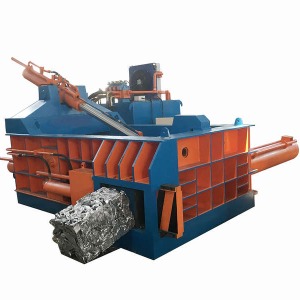
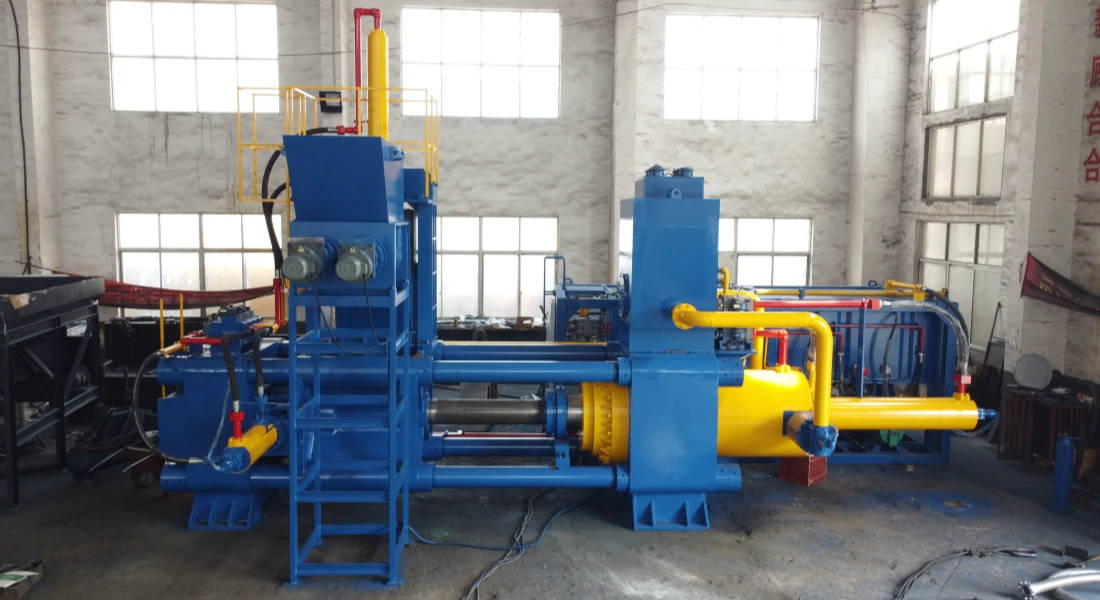
In a horizontal briquetting machine, metal scrap is fed into a side-mounted hopper. A pre-press cylinder first performs preliminary compaction on the loose chips and pushes them into the main compression chamber. Subsequently, the powerful main cylinder applies final compression in a horizontal direction, and the finished briquette is ejected from the side or the front of the machine.
The inclusion of a dedicated pre-press mechanism is the most significant distinction between the horizontal and vertical briquetting machine. This pre-press cylinder effectively handles long, stringy turnings and prevents tangling or bird-nesting. Additionally, the horizontal briquetting machine features a robust box-type frame structure, which provides superior rigidity and the ability to withstand extremely high pressure. It also boasts a high degree of automation and can be easily integrated with conveyor belts, elevators, and other automated feeding systems to enable unmanned operation.
Therefore, the horizontal briquetting machine is exceptionally well-suited for large-scale manufacturing enterprises such as automotive plants and heavy machinery manufacturers. These operations typically generate massive volumes of long, stringy CNC lathe turnings and require high throughput, superior efficiency, and unwavering reliability, making this type of machine an ideal fit.
Advantages and Disadvantages of the Horizontal Briquetting Machine:
Advantages:
Superior Handling Capacity: Exceptionally well-suited for processing long, stringy turnings and tangled bundles of scrap without the need for pre-conditioning or manual cutting.
High Production Efficiency: The continuous sequence of pre-pressing followed by main compression results in shorter cycle times and significantly higher throughput.
Advanced Automation Integration: Serves as the core equipment for building fully automated scrap handling and recovery systems.
Stable and Robust Operation: The rigid box-frame construction ensures smooth, stable operation with relatively low noise and vibration levels.
Disadvantages:
Large Footprint: Requires substantial horizontal floor space.
Higher Investment Cost: The more complex structure results in higher manufacturing costs and a greater purchase price compared to vertical machines of equivalent tonnage.
Complex Maintenance Requirements: Maintenance procedures are relatively more involved due to the complexity of the pre-press mechanism and automation components.
Choosing Between Vertical and Horizontal Briquetting Machines
The selection between a vertical or horizontal briquetting machine depends primarily on material morphology and production scale.
For short chips and moderate output: If the metal scrap consists mainly of short, granular chips and daily throughput is not exceptionally high, a vertical briquetting machine represents the more economical and practical choice.
For long, stringy turnings and high-volume automation: If the waste stream is dominated by difficult-to-handle, long, stringy turnings and the operation demands massive throughput with automated handling, the horizontal briquetting machine is not merely an option—it is the singular, most efficient solution.