Metal Briquetting Machine
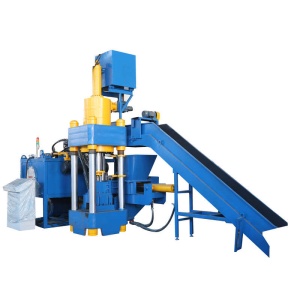
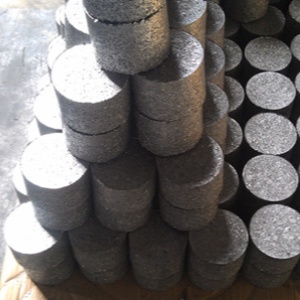
TITAN Metal Briquetting Machine is designed to compress both ferrous and non-ferrous metal scraps — including chips, powder, shavings, swarf, and turnings from materials such as steel, cast iron, copper, aluminum, and titanium — into high-density cylindrical or square briquettes. This process significantly reduces melting loss in furnaces, minimizes storage space and transportation costs, and enhances the overall value of scrap metal for recycling.
Product Features(Y83 Series)
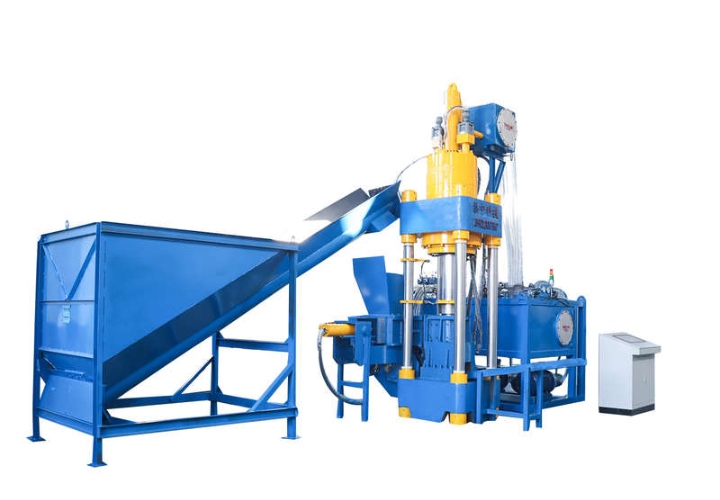
TITAN Y83 series briquetting press machine has two types: Y83 series vertical type & Y83W series horizontal type, there are 7 standard models available and the customized design service is also available under the customer's specific requirements. TITAN Y83 series vertical type is four columns structure while the Y83W series horizontal type has 3 columns & 4 columns structure optional, all models are available to equip conveying system to be integrated into fully automated production lines.
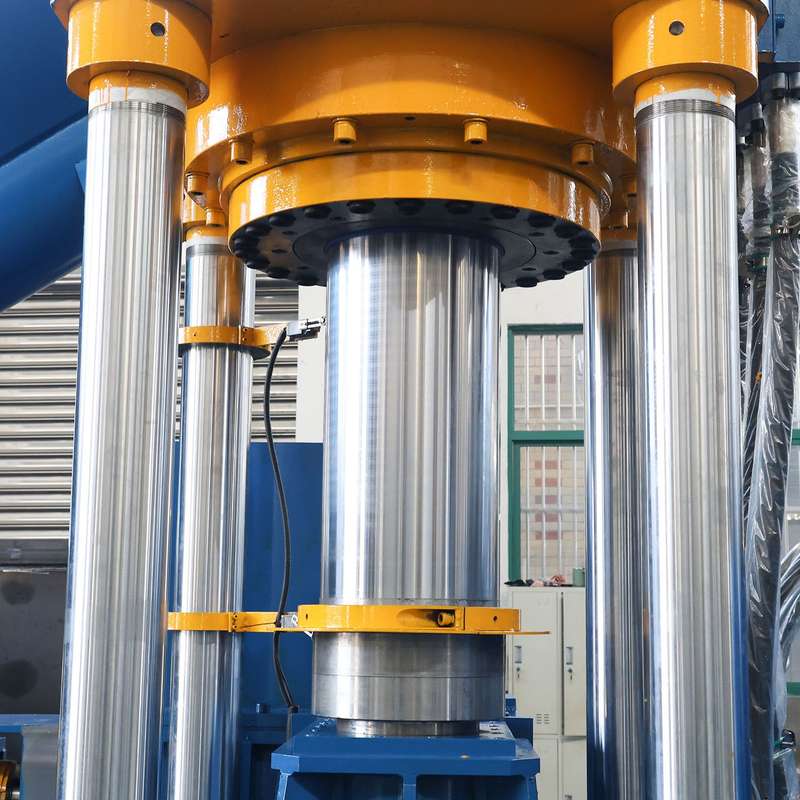
High-Efficiency Hydraulic System
Integrated large-flow valve block minimizes pressure loss and ensures powerful, stable performance.
Reliable & Stable Operation
Unique oil circuit and electro-hydraulic valves enable consistent heavy-duty operation.
Shock-Free Pressure Release
Built-in pre-unloading device eliminates hydraulic shock, protecting core components.
Fast Cycling & High Output
Advanced quick-action system shortens cycle time and increases productivity.
Intelligent Auto Control
PLC-based automatic control ensures strong interference resistance and low failure rates.
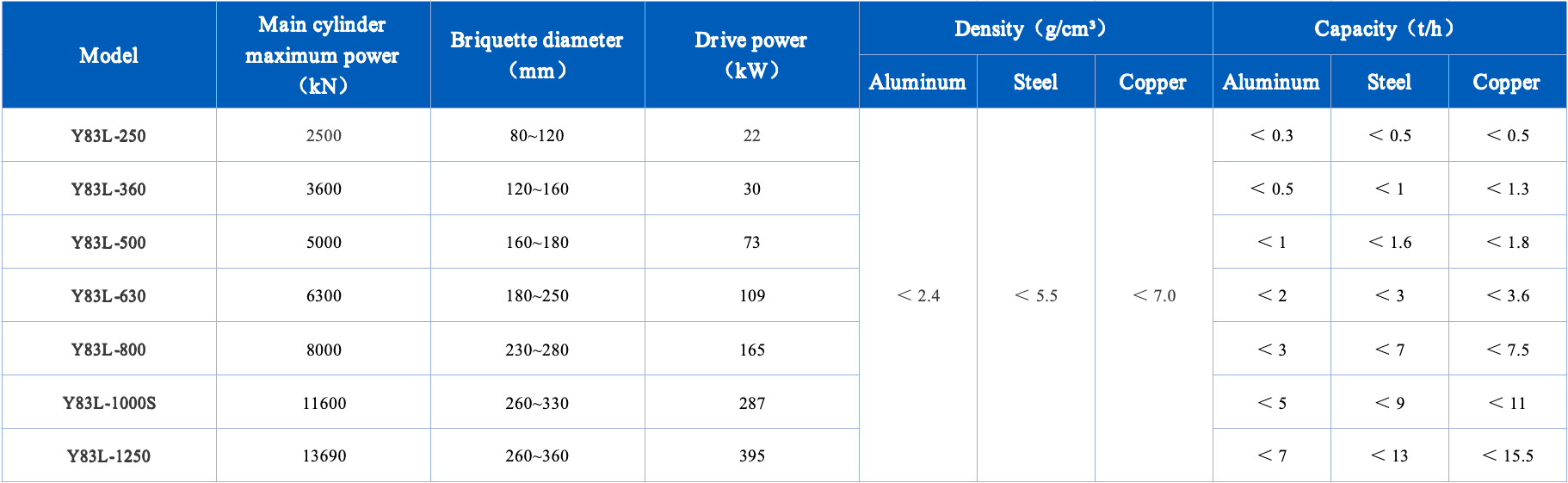
Technical Parameters
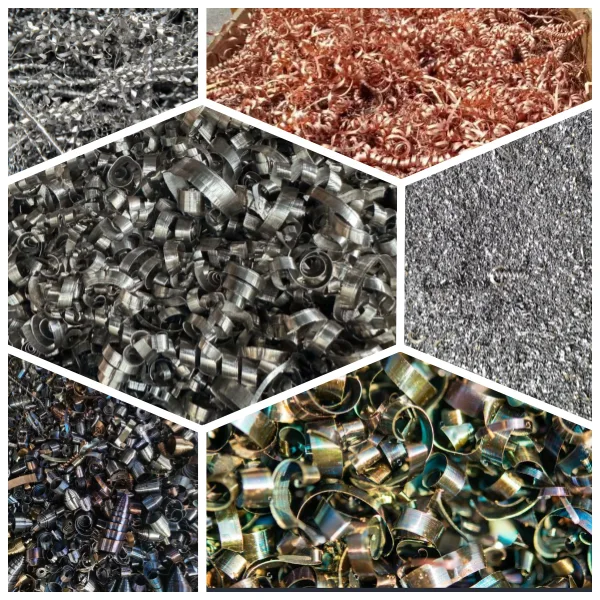
Applicable Materials & Scrap Types
TITAN metal briquetting press is widely applicable to ferrous and non-ferrous metal chips, turnings, and powders, helping enterprises achieve volume reduction, oil removal, increased density, and enhanced recycling value.
Steel Chips / Iron Turnings
Common machining waste—carbon steel, stainless steel, and iron scrap in chip or turning form—is briquetted to reduce volume and oxidation loss while increasing charge density for efficient remelting in steel mills and foundries.
Cast Iron Chips
Granular cast iron chips, prone to dust during machining, are briquetted to increase density, reduce pollution, and improve recycling efficiency for internal reuse within foundries.
Aluminum Chips / Turnings / Powder
Bulky aluminum scrap containing residual fluids is briquetted to reduce volume, recover cutting fluids, and improve remelting efficiency by minimizing melt loss and enhancing value.
Copper Chips / Brass Turnings
High-value copper and brass scrap is briquetted to reduce oxidation, increase density, and improve handling and sorting, thereby maximizing monetization returns.
Stainless Steel Chips
Long, tangled stainless steel chips are briquetted into dense, uniform blocks to reduce volume, improve handling, and minimize melt loss of valuable elements like nickel and chromium during remelting.
In addition, it is also suitable for specialty metals such as titanium, magnesium, and nickel alloys. These metals are primarily used in high-end manufacturing sectors. They possess high intrinsic value, yet some are characterized by flammability or susceptibility to oxidation. Briquetting reduces the exposed surface area, thereby enhancing storage and transportation safety while maximizing material retention value. This makes briquettes ideally suited for industries such as aerospace and energy.
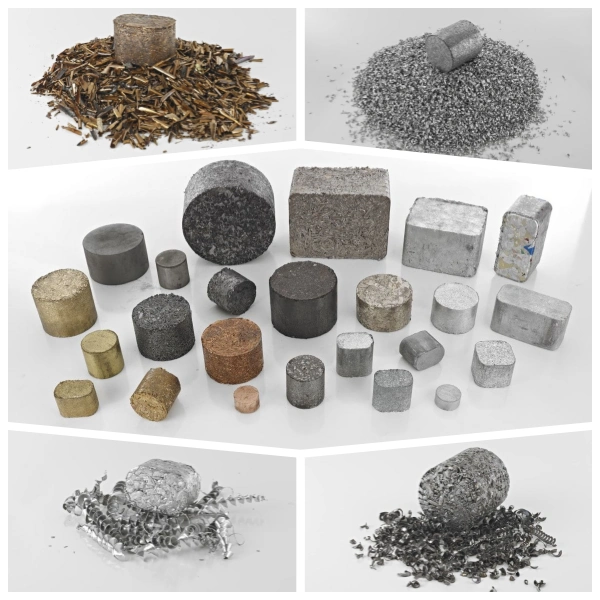
Economic Benefits of Metal Briquetting
Enhanced Melting Efficiency
By compressing loose metal chips into high-density briquettes, the material achieves better furnace contact and more uniform melting, significantly reducing burn-off loss and improving overall metal recovery rates.
Lower Storage & Transport Costs
Briquetting greatly reduces the volume of loose scrap, allowing more material to be stored and transported in the same space, which directly lowers logistics costs and optimizes warehouse management.
Improved Operational Safety
Compacting sharp, loose, or potentially reactive metal scrap into solid briquettes minimizes handling risks, reduces fire hazards (especially for aluminum or magnesium), and creates a safer working environment.
How the Metal Briquetting Machine Works
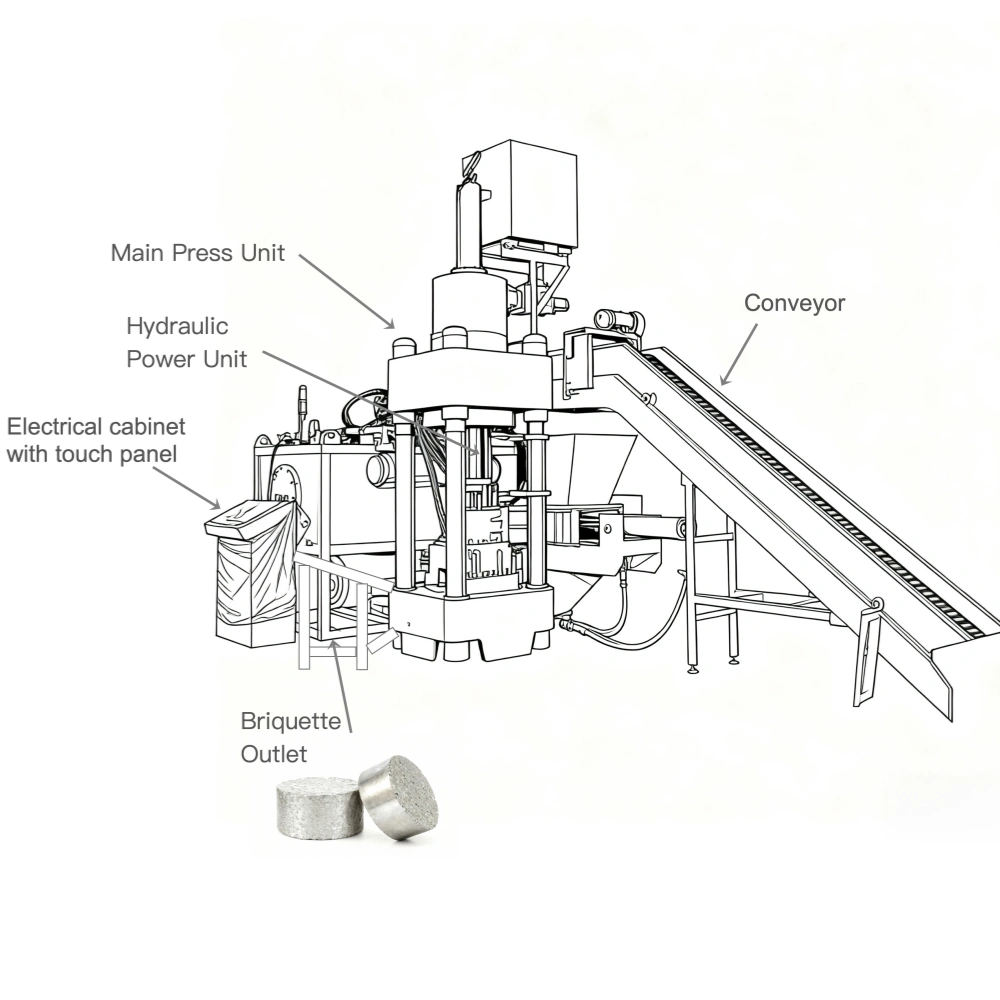
The briquetting process uses hydraulic pressure to compact metal chips and chips metal without adding any binder.
Main process steps include:
Feeding
Metal chips are collected and loaded into the hopper.
Compression
Hydraulic cylinders apply pressure to form dense briquettes.
Discharge
Compact briquettes are automatically ejected for transport or remelting.
The resulting briquettes are 5–10 times denser than loose chips, reducing storage volume and improving melting efficiency in foundries or recycling plants.
Working video
The Y83 metal briquetting machine is widely used in machining workshops, metal fabrication plants and scrap recycling centers. It can be integrated into existing production lines to achieve continuous scrap processing.
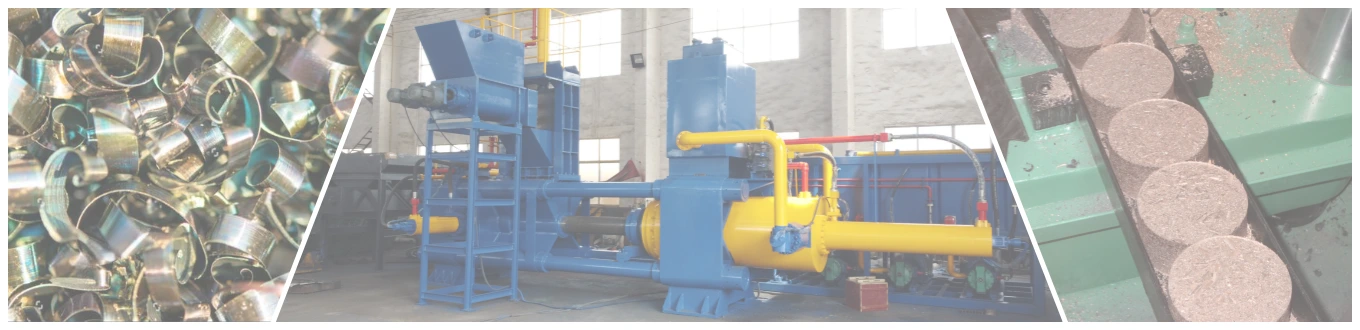
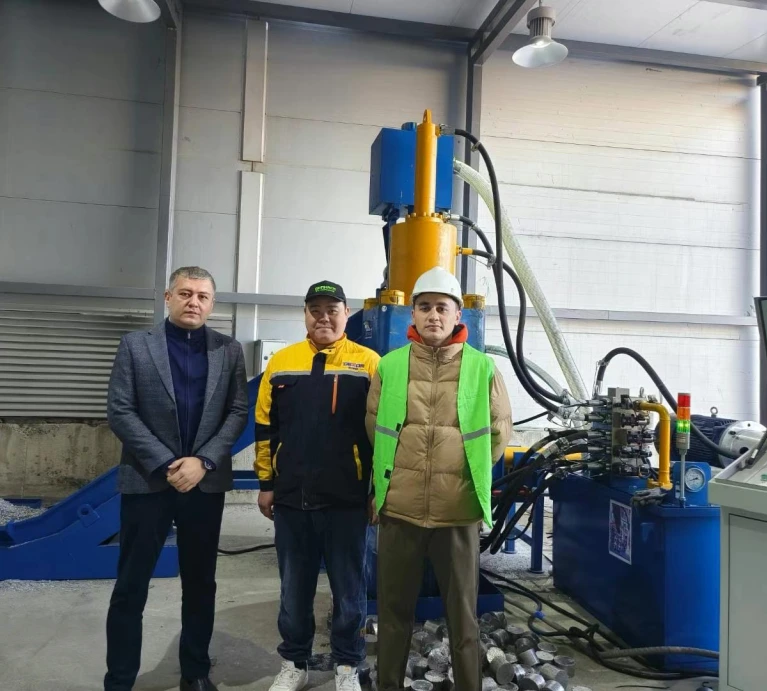
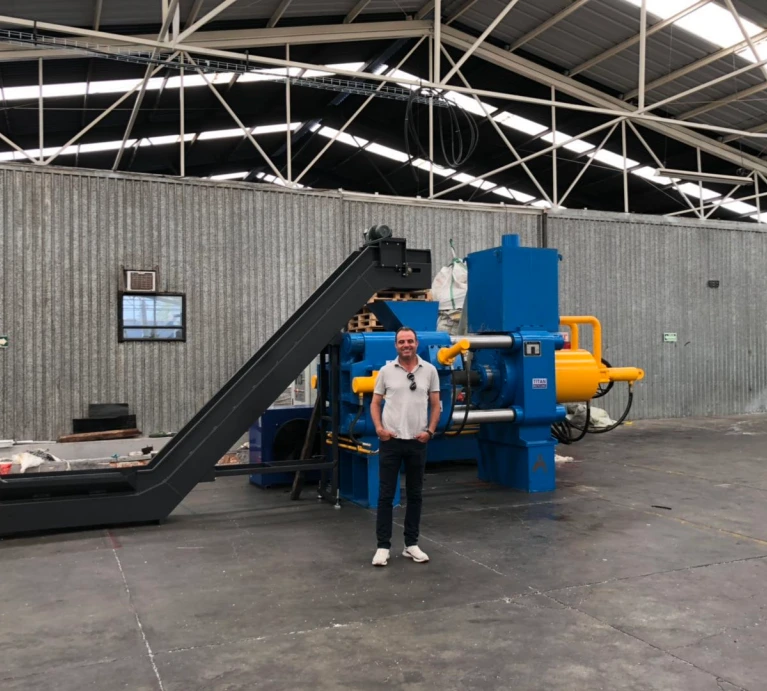
Working Scenes & Project Cases
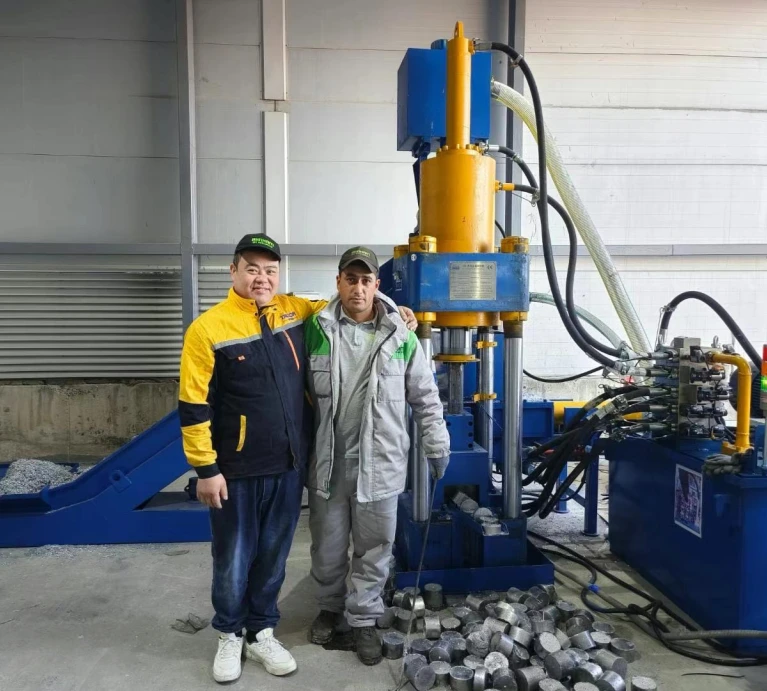
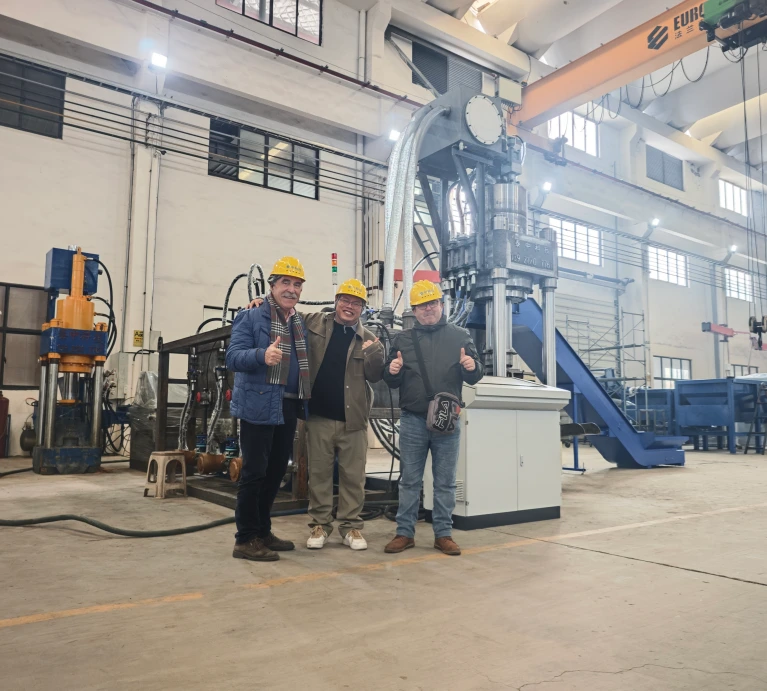
FAQs About Metal Briquetting Machine
Aluminium, steel, copper, cast iron chips and light metal scrap.
Yes, briquettes can be directly charged into furnaces with lower oxidation loss.