
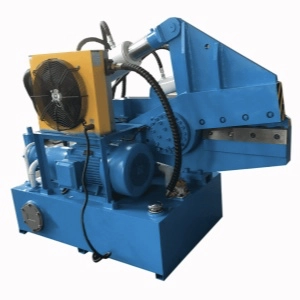
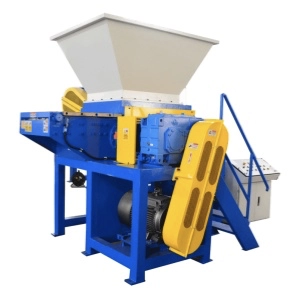
Definition of a Metal Shredder
A metal shredder, also referred to as a metal crusher, is a mechanical device specifically designed to break down various types of metal scrap into smaller metal pieces or granules. Based on the characteristics of the feed material, metal shredders can be broadly categorized into light-duty and heavy-duty shredding equipment. Light-duty metal shredders are particularly adept at processing light-gauge metal scrap, while heavy-duty metal shredders are purpose-built to handle large-dimension, high-hardness, high-density metal scrap or ore.
Due to their highly efficient shredding capabilities, metal shredders play a vital role in modern industry and are widely used across sectors such as metal fabrication, scrap recycling, and ore beneficiation.
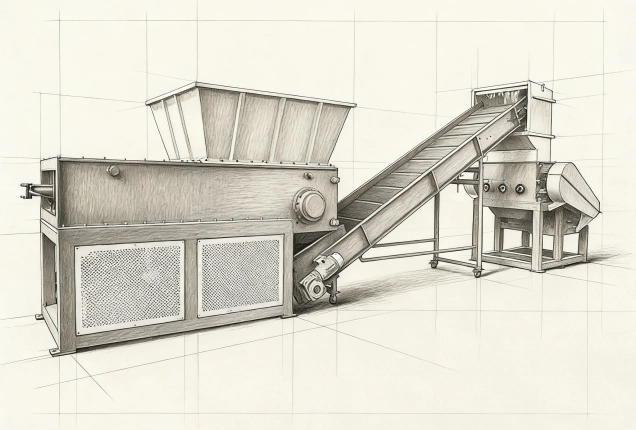
Structure of a Metal Shredder
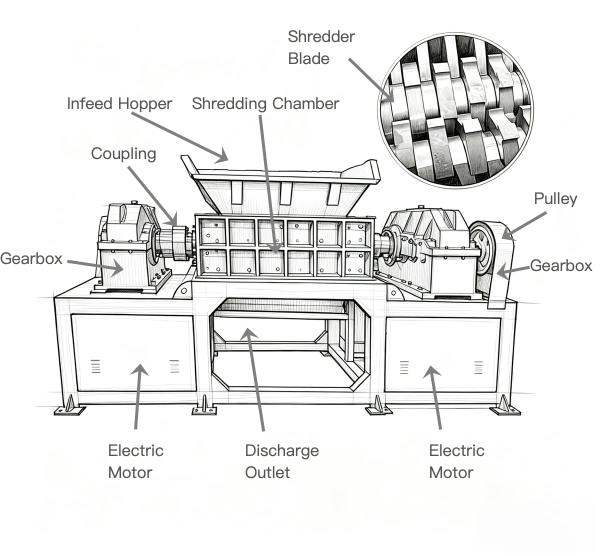
Scrap metal shredders are classified into single-shaft and double-shaft types. They work through the coordinated operation of the electric motor, gearbox, blades, and other components, breaking down metal scrap using principles of shearing, squeezing, and tearing. Taking the core components of a double-shaft shredder as an example, the main structural parts are detailed below:
Infeed Hopper
The infeed hopper of a metal shredder features a funnel-shaped structure. This large-opening design is primarily intended for convenient feeding. It can be used in conjunction with a conveyor belt to efficiently direct metal scrap into the hopper. The lower section is narrower, effectively preventing metal fragments from ejecting outward during the shredding process.
Shredding Chamber
The shredding chamber is constructed from heavy-gauge, high-strength welded steel plate. The interior houses the blades, main shafts, and other foundational components. The design specifications of the chamber must strictly comply with industry standards, as it must withstand immense counter-forces and abrasive impact during operation. This is therefore the primary prerequisite for ensuring safety.
Coupling
The coupling connects the output shaft of the gearbox to the blade shaft. It transmits the immense torque generated by the gearbox, driving the blades to rotate. When encountering extremely hard, difficult-to-shred materials that cause excessive torque, certain types of couplings serve a buffering or overload protection function, preventing damage to core components.
Gearbox
The primary function of the gearbox is to reduce speed and multiply torque. It converts the high-speed, low-torque power transmitted from the electric motor and pulley into the low-speed, high-torque force required by the blade shaft. This stage is the most critical in the entire shredding process.
Electric Motor
The electric motor serves as the power source for the entire machine. It is responsible for converting electrical energy into mechanical rotational kinetic energy, driving the gearbox via the pulley. Motors are available in various power ratings, and the power rating directly determines the shredding capacity and working efficiency of the equipment.
Discharge Outlet
The discharge outlet is located beneath the shredding chamber. Utilizing the principle of gravity, the shredded fragments fall directly into the discharge channel or collection container.
Pulley
The pulley is a transmission device that ensures smooth power transfer and speed matching. With the pulley installed, the machine's transmission process becomes more stable with reduced noise. It also helps cushion the impact caused by blade jams, thereby protecting the motor.
Shredder Blade
The shredding process is carried out directly by the shredder blades. These blades come into direct contact with the metal scrap, reducing it into metal fragments through actions such as shearing, impact, and crushing. The material requirements for these blades are extremely high; they are typically made from high-alloy wear-resistant tool steel and feature a multi-angular or disc-shaped profile mounted on the blade shaft. After a period of operation, the blade wear level must be inspected. Severely worn blades must be replaced promptly; otherwise, both processing efficiency and machine durability will be adversely affected.