Metal Stamping Scrap Recycling Solutions

Metal Stamping Scrap Recycling: From Production-Line Collection to Downstream Recycling

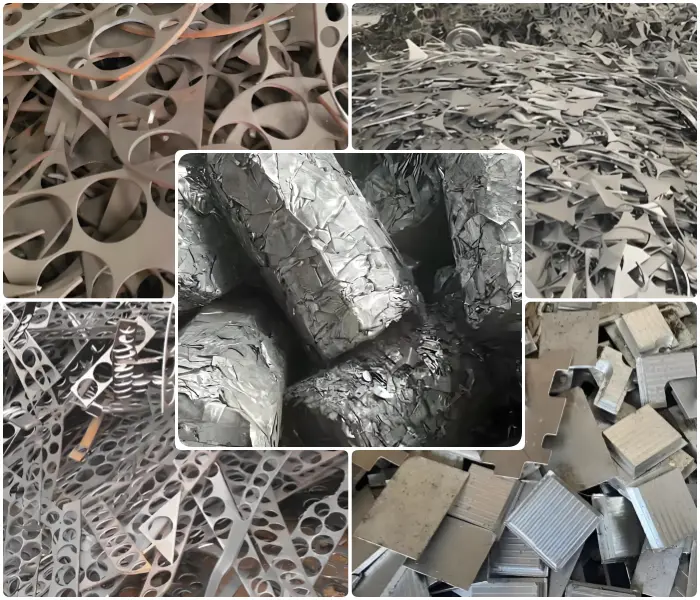
Metal stamping, punching, blanking and related sheet-metal operations continuously generate offcuts, scrap skeletons, punching scrap, strip offcuts and other sheet-form scrap.

Unlike scrap that has already been collected and stockpiled in one place, the first question with metal stamping scrap is usually not which processing machine to choose. It is whether the scrap can be removed from the production area in time, whether separate material streams need to be maintained, and how the scrap can flow reliably into downstream collection, volume reduction or recycling.
Metal Stamping Scrap Recycling: From Production-Line Collection to Downstream Recycling

If scrap is not removed promptly from around stamping equipment, continuously generated offcuts can gradually increase local accumulation and the need for manual handling. If material streams that can be clearly separated at source are mixed together, additional identification and sorting may also be required later.

Stamping scrap handling should therefore be planned around the production pace and the movement of the scrap:

Where is the scrap generated? In what form is it discharged? Can it leave the production area reliably? How will it reach a central collection point? Do separate material streams need to be maintained? Can downstream receiving and processing capacity keep pace with the actual scrap generation rate?

Once these questions are clear, the next step is to determine whether volume reduction, size adjustment or other downstream treatment is still required, based on scrap form, required throughput, site conditions and downstream requirements.

TITAN works with customers to discuss how point-of-generation collection, scrap conveying and centralised processing should connect, based on the material, form, generation pattern, required throughput, shop-floor layout and downstream recycling requirements of the stamping scrap.

What to Confirm Before Planning a Stamping Scrap Handling System

Define the Scrap Flow Before Choosing Equipment or Processing Methods

Although stamping scrap originates from sheet-metal operations, different projects can vary significantly in scrap form, generation rate, discharge point and shop-floor layout.

Before deciding on a specific handling route, the following questions should be clarified.

Material and Separation Requirements

First confirm the metal being stamped and whether different scrap streams need to remain separate.

If different materials can already be clearly separated at the point of production, that separation should generally be maintained.

Whether further separation by grade or production batch is required should depend on actual recycling and downstream requirements, not on a fixed rule applied to every project.

  • whether the material is steel, aluminium, stainless steel, copper or another metal
  • whether multiple materials are processed in the same production area
  • whether different grades or production batches are processed
  • whether downstream recycling allows these materials to be mixed
  • which material streams need to be collected and managed separately

Scrap Form and Discharge Condition

The next step is to confirm the condition in which the scrap leaves the stamping operation.

Individual piece size is only part of the assessment. It is also necessary to understand whether the material tends to scatter, overlap, bend or tangle, and whether its current form can enter the collection or conveying stage reliably.

  • small sheet pieces and punching scrap
  • blanked scrap pieces
  • strip or long offcuts
  • scrap skeletons
  • large offcuts
  • irregular sheet-form scrap

Generation Pattern and Actual Scrap Volume

Stamping scrap may be generated continuously or intermittently according to the production cycle or batch changes.

Knowing only the total number of tonnes generated per day is not enough to determine system requirements.

In continuous production, the actual scrap flow rate and peak load over shorter periods are equally important.

  • the actual scrap volume generated by each machine
  • the maximum scrap generation rate over a given period
  • whether scrap discharge is continuous or cyclical
  • whether several machines operating at the same time can create a combined peak in scrap generation

Scrap Generation Points and Shop-Floor Layout

If a workshop has only one stamping station, scrap logistics may be relatively simple. Where several presses or stamping lines operate at the same time, collection needs to be considered across the entire workshop.

The purpose here is to determine how scrap should move from the production point to the collection or processing point, rather than simply defining the capacity of one machine.

  • the number of scrap generation points
  • the relative positions of the machines
  • the distance between production equipment and the central collection or processing area
  • available aisles and usable floor space
  • whether individual collection, zoned consolidation or central conveying is more suitable

Required Downstream Material Condition

Finally, determine where the scrap will go after it leaves the stamping area.

Only after the material condition accepted by the downstream stage is clear can the upstream collection, conveying and treatment route be properly defined.

  • direct loading into bins or temporary storage
  • transfer to another recycling area
  • compaction for volume reduction
  • size adjustment where required
  • entry into another downstream recycling process

Different Production Conditions Require Different Handling Routes

Stabilise Scrap Flow First, Then Decide Whether Volume Reduction or Size Adjustment Is Needed

The first objective in stamping scrap handling is to ensure that continuously generated scrap can leave the production area in time and move reliably into the next stage.

The specific route should be determined by the scrap generation pattern, form, quantity, production layout and downstream requirements.

Low Volumes or Intermittent Generation: Point-of-Generation Collection May Be Enough

If scrap volumes are relatively low, or production itself is intermittent, collecting the scrap locally in bins, scrap boxes or other suitable containers may already meet the operating requirements.

The main points are to ensure that:

If a simple collection method already operates reliably, there is no need to add a more complex system purely for the sake of automation.

  • the container can receive the actual scrap being generated
  • replacement frequency can keep pace with production
  • full containers do not interfere with work around the machine
  • material streams that need to remain separate use different collection containers

Continuously Generated Small Scrap: Use Conveying to Reduce Frequent Manual Removal

For small sheet pieces and punching scrap continuously discharged from below the die, from a scrap chute or from other locations, frequent manual removal may no longer keep pace with production.

In this case, scrap conveying equipment can be considered to move the material away from the stamping area continuously or in step with the production process.

The key issue is not simply conveying distance. More importantly, the upstream scrap generation rate needs to remain coordinated with downstream receiving and processing capacity.

If the end of the conveying system cannot accept the scrap quickly enough, the accumulation problem will simply move from the stamping equipment to another location.

Long Strips, Strip Scrap or Large Sheet Pieces: First Confirm Whether They Can Enter the Collection and Conveying System Reliably

Long offcuts, strip scrap, scrap skeletons and larger sheet-form pieces may bend, overlap, drag or tangle because of their length, shape or flexibility. Their overall dimensions may also make them unsuitable for direct entry into an existing collection or conveying system.

The first question should therefore be:

Can the scrap in its current form leave the production point reliably?

If it can be collected and conveyed reliably, it can remain in its existing form for transfer downstream.

If its current form is already interfering with discharge, collection or conveying, suitable guiding, discharge adjustment or size pretreatment may be considered where necessary.

The purpose of size pretreatment here is to solve an actual material-flow problem. It should not become a fixed step for all stamping scrap.

Multiple Stamping Machines: Choose Individual Collection, Zoned Consolidation or Central Conveying According to the Material Flow and Layout

Where several presses or production lines generate scrap at the same time, scrap logistics should be organised across the workshop as a whole.

Depending on actual conditions, the system may use:

Whether central collection or central conveying is appropriate depends on scrap material, generation volume, machine positions and production pace. Available floor space and downstream receiving capacity also need to be considered.

The purpose of central collection and conveying is to reduce unnecessary manual handling and create a more stable scrap flow, not to send all scrap into one common system regardless of material.

  • individual collection for each machine
  • zoned consolidation from several machines
  • central conveying of similar scrap streams
  • separate material streams for different metals

After Central Collection: Decide Whether Further Processing Is Actually Needed

Once the scrap can leave the production area reliably, determine whether its current condition already meets storage, transport or downstream process requirements.

If it does, the material can be transferred directly or sent into subsequent recycling.

If problems remain, ask the next question:

Is the main problem volume or size?

If the scrap is loose and occupies excessive space, compaction for volume reduction may be considered.

If the current size or form is unsuitable for the next stage, appropriate size adjustment can be considered.

Whether this involves baling for volume reduction, shredding or another size-treatment method should depend on scrap condition and downstream requirements. The fact that a material comes from a stamping process does not justify preselecting a particular machine.

Maintain Necessary Separate Material Streams Throughout the Process

Material separation should not be considered only at the end of the process. It should remain part of the scrap handling strategy from beginning to end.

If steel, aluminium, stainless steel, copper or other materials can already be distinguished at the production source, that separation should be maintained as far as practical during collection, conveying, temporary storage and downstream treatment.

Do not remingle clearly separated material streams simply to eliminate one collection point or one conveying route, only to add more sorting work downstream.

Stamping Scrap Handling from the Production Line to Downstream Recycling

Build a Scrap Handling Chain That Keeps Pace with Production

Stamping scrap handling should begin at the point where scrap is generated, not at the downstream volume-reduction equipment.

Stamping production → Scrap generation
Confirm material, form and generation rateOffcuts / scrap skeletons / punching scrap / strip scrap / sheet-form scrap
Maintain necessary separate material streams
Decision 01Can the scrap in its current condition leave the production area reliably?
No
Discharge adjustment, guiding or size pretreatment where required
Create a condition suitable for reliable collection / conveying
Yes
Organise scrap logistics according to production conditions
Low volume / intermittent generation
Local container collection
Continuous generation
Scrap conveying
Multiple generation points
Individual collection / zoned consolidation / central conveying
Central collection / temporary storage
Decision 02Does the current scrap condition already meet storage, transport or downstream requirements?
Yes
Direct transfer or downstream recycling
No
Identify the main problem
Excessive volume
Compaction for volume reduction where required
Unsuitable size or form
Size adjustment where required
Create a material condition suitable for the next process
Storage, transport or the relevant downstream recycling process

The receiving and processing capacity of the overall system should match the actual stamping scrap generation rate, helping to prevent new accumulation around production equipment, at conveyor discharge points or in centralised processing areas.

Depending on project requirements, TITAN can support the configuration of scrap conveying, volume reduction and necessary size-adjustment stages within a stamping scrap handling system. The specific equipment combination should be determined according to scrap condition, generation volume and workshop conditions.

FAQ

Does Every Stamping Line Need an Automatic Scrap Conveying System?

No.

If scrap generation is relatively low, production is intermittent, and bins or other containers can already collect and transfer the scrap in time, there is no need to add a complex conveying system purely for automation.

Mechanical conveying or centralised collection becomes more relevant when scrap is generated continuously, manual removal is frequent, or multiple scrap generation points are already affecting workshop logistics.

The key question is not whether the system is automated, but whether the current method can reliably keep pace with actual production.

How Should Downstream Processing Capacity Be Matched to Stamping Production?

Daily scrap tonnage alone is not enough.

Stamping scrap is generated continuously or cyclically during production, so the actual flow rate and peak generation rate over a given period also need to be considered.

Planning should normally account for:

  • total daily scrap generation
  • maximum generation rate over a given period
  • operating pace of each stamping machine
  • capacity of collection containers or intermediate storage
  • conveying capacity
  • downstream receiving and processing capacity

The objective is to avoid continuous accumulation at any point in the system, rather than simply maximising the rated capacity of one machine.

What Should Be Considered When a Stamping Line Changes Between Different Materials?

If different materials or grades need to be recovered separately, the scrap stream also needs to be managed during production changeovers.

Check:

  • whether material from the previous batch remains in the collection container or conveying route
  • whether the old and new materials are allowed to mix
  • whether the collection point needs to be changed
  • whether separate temporary storage and identification are required

If downstream recycling allows the materials to be mixed, unnecessary separation should not be added. If separate recovery is required, clear material streams should be maintained from the production source wherever possible.

What Information Is Needed to Plan a Stamping Scrap Handling Solution?

The following information is normally required:

  • material being stamped
  • main scrap types
  • maximum scrap dimensions, thickness and form
  • scrap generation volume from each machine and from the workshop as a whole
  • whether generation is continuous or intermittent
  • maximum generation rate or peak load over a given period
  • number and layout of stamping machines
  • current collection and handling method
  • whether different materials need to be managed separately
  • whether the downstream requirement is direct storage and transport, volume reduction or further size adjustment

This information helps determine whether the project actually requires simple collection, scrap conveying, centralised collection and processing, or additional downstream volume reduction or size adjustment.

Discuss Your Stamping Scrap Handling Requirements

Tell us the number and layout of your stamping machines, the materials being processed, scrap form and dimensions, whether scrap is generated continuously or intermittently, actual generation volume and peak rate, your current collection method and downstream recycling requirements.

TITAN can discuss with you how scrap collection, conveying and centralised volume reduction or size adjustment should connect according to the production pace and workshop conditions.

Get in Touch