Copper Scrap Recycling Solutions

Copper Scrap Recycling Solutions: Start with Material Classification and Scrap Condition

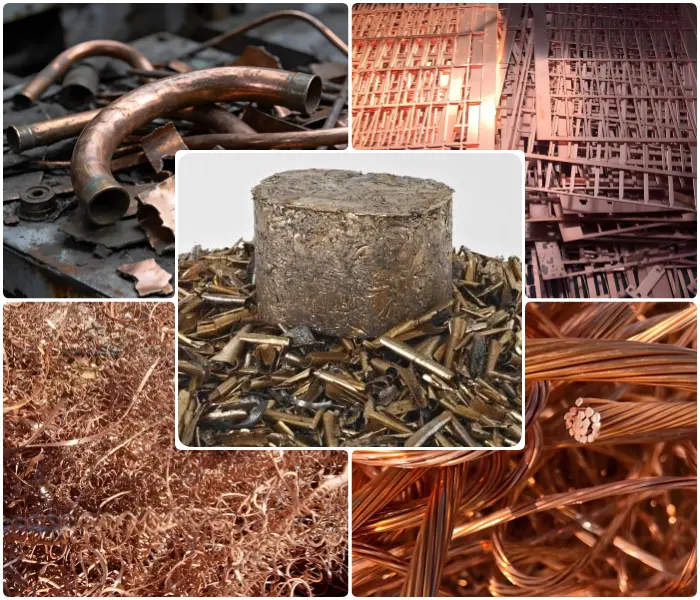
Copper scrap can come from machining, metal manufacturing, electrical equipment, building demolition, scrap recycling, and other sources. It may enter the recycling process as copper chips, copper plate offcuts, copper tubes, copper busbars, copper wire, cables, or mixed and composite copper scrap.

Copper scrap from different sources can vary in copper type, physical form, degree of mixing, and downstream use. Copper generated and collected separately during production is generally easier to keep clearly identified by material and source. Scrap from dismantling or multiple collection sources requires closer attention to whether it contains other metals, insulation, plastics, or other non-metallic materials.
Copper Scrap Recycling Solutions: Start with Material Classification and Scrap Condition

For this reason, the processing route should not be determined solely by whether the material is copper. If copper materials are already clearly classified, their separate material streams should be preserved wherever practical. The next step is to assess the degree of mixing, physical form, fluid content, and downstream requirements to determine whether separation, size adjustment, volume reduction, or other scrap pretreatment is needed.

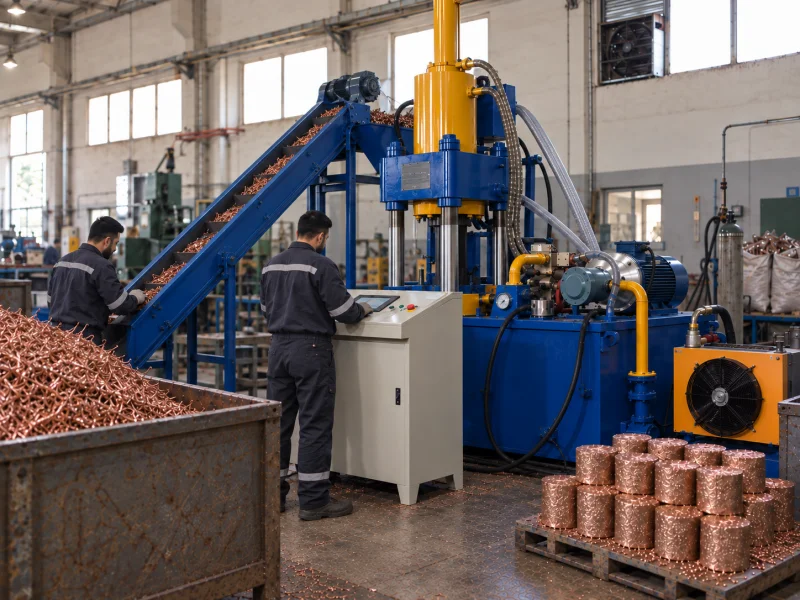
TITAN primarily configures equipment for size adjustment and volume reduction according to the actual condition of the copper scrap, helping prepare the material for storage, transport, sorting, or downstream recycling.
What to Confirm for Different Copper Scrap Conditions

Confirm the Material and Degree of Mixing Before Assessing Physical Form

Even when copper is the main material, different copper scrap streams may require completely different processing routes because of differences in source, copper type, degree of mixing, and physical condition.

Before defining the processing route, first confirm whether the material identity is clear, whether separate material streams already exist, and whether the scrap contains other metals or non-metallic materials. Only then should size, form, fluid content, and other physical conditions be assessed for their effect on downstream processing.

Copper Chips and Turnings

Copper chips commonly come from turning, milling, and other machining operations. They may be fine, curled, stringy, or clumped, and they may carry cutting fluid.

This information determines whether the copper chips require further processing and how the subsequent processing route should be defined.

  • Whether the source and copper type are known
  • Whether the chips carry cutting fluid or other liquids
  • Whether their current form affects stable processing
  • Whether other metals or non-metallic materials are mixed in

Copper Plates, Tubes, Busbars, and Offcuts

These forms of copper scrap often have relatively clear material identity, but their size, length, and shape may affect storage, handling, and feeding into the next process.

If the existing dimensions already meet downstream requirements, additional size adjustment is unnecessary.

  • Whether the material and source have already been classified
  • Current length, width, or individual piece dimensions
  • Whether the current dimensions affect storage, handling, or downstream feeding
  • The material size and condition accepted by the downstream process

Copper Wire and Cables

For copper wire and cables, the key issue is not simply whether the material contains copper, but whether insulation, sheathing, or other composite materials are present.

For cables with composite structures, the first issue is separating the copper from the other materials rather than simply reducing the material size.

  • Whether the material is bare copper wire or insulated wire and cable
  • Whether the copper has already been separated from the insulation
  • Whether other metal components are present
  • Whether the downstream process requires intact wire, separated copper, or further processed material

Mixed or Composite Copper Scrap

Copper scrap from dismantling or multiple collection sources may contain copper together with other metals, plastics, rubber, insulation, or other impurities.

For this type of scrap, first determine its composition, how much can be classified directly, and whether composite structures require liberation. The subsequent processing route should then be defined according to downstream requirements.

  • Whether the different materials can be classified directly early in the process
  • Whether composite structures require material liberation before further sorting
  • Whether any existing separate copper streams should be preserved
  • What material composition is required downstream

Different Copper Scrap Conditions Require Different Processing Routes

Resolve Material Identity and Mixing First, Then Decide Whether Size Adjustment or Volume Reduction Is Needed

The objective is not to send every type of copper scrap through the same equipment. It is to preserve useful material classification wherever possible and prepare the scrap for the next process.

Copper Chips and Turnings: Decide on Briquetting According to Fluid Content and Chip Form

For copper chips and turnings with a known source and suitable condition, briquetting can be considered where the main objective is to increase density, reduce the volume occupied by loose chips, and improve storage, transport, or preparation for downstream recycling.

If the chips carry a large amount of liquid or are long, curled, or clumped, first assess whether these conditions affect stable feeding and briquetting performance. Depending on the actual condition, size reduction, fluid separation, or other pretreatment may be required.

The specific pretreatment should be determined by the actual chip form and fluid condition. It is not a fixed step for every copper-chip project.

Copper Plates, Tubes, Busbars, and Offcuts: Adjust Size Only When Required

Where copper plates, tubes, busbars, or offcuts are too long, too large, or shaped in a way that affects downstream feeding, shearing or other size-reduction methods can be applied according to downstream requirements.

If the current dimensions already meet downstream requirements, the material can proceed directly to the next stage.

Copper Wire and Cables: Resolve Composite Material Separation First

Bare copper wire may not require additional mechanical processing if its material identity and physical condition already meet downstream requirements.

For wire and cables with insulation, sheathing, or other composite structures, an appropriate specialised separation method should first be selected according to the actual construction so that the copper and other materials can form more clearly defined material streams. Only after that should the need for additional size or volume reduction be assessed.

Mixed or Composite Copper Scrap: Classify What Can Be Classified Directly and Liberate Materials Only Where Necessary

Copper scrap mixed with other metals or non-metallic materials should not automatically follow a “shredding first, sorting second” route.

If the different materials can be classified directly early in the process, separate material streams should be preserved or restored first.

Where composite structures are difficult to separate directly, shredding or other suitable processing may be used to promote material liberation. Subsequent sorting can then be configured according to downstream requirements.

Shredding can change material size and, in suitable material structures, promote material liberation. It cannot replace material sorting.

Processing Principle

Not every copper scrap stream requires mechanical processing.

If the material is already well classified and its material identity, dimensions, and condition meet the requirements for storage, transport, sorting, or downstream recycling, there is no need to add briquetting, shearing, shredding, or other equipment.

Equipment specifications and system configuration should only be determined after the processing route has been established, based on actual throughput, individual piece size, feeding method, and site conditions.

Copper Scrap Processing Before Downstream Recycling

From Material Identification to the Condition Required by the Next Stage

Typical processing flow:

  1. Incoming copper scrap
  2. Confirm source, material identity, and copper type
  3. Preserve existing segregated material streams

    Avoid remixing clearly classified copper with other materials

  4. Check mixing and physical condition

    Confirm the presence of liquids, coatings, composite structures, excessive size, or unsuitable form

  5. Pretreatment or separation where required

    Apply classification, fluid separation, specialised separation, or other preparation according to the actual material

  6. Size adjustment or volume reduction where required
  7. Downstream sorting where required
  8. Bring the copper material to the condition required downstream
  9. Storage and transport, further sorting, melting, or other recycling processes

Not every copper scrap project requires all of these steps. Material that already meets the requirements of the next process can bypass unnecessary treatment.

TITAN focuses mainly on the size-adjustment and volume-reduction stages of copper scrap recycling. Specialised cable separation, fine sorting, specialised impurity removal, and downstream melting should be configured separately according to the requirements of each project.

Frequently Asked Questions About Copper Scrap Recycling

Can Different Copper Materials or Copper Alloys Be Processed Together?

They should not be mixed simply because they are all copper-based materials.

Where copper materials from different sources, or different copper materials and alloys, are already collected separately, these streams should generally remain separate. Whether they can be mixed depends on downstream requirements for material composition and the final copper stream.

Clearly classified copper material normally does not need to be mixed first and then identified and sorted again.

Do Fluid-Bearing Copper Chips Always Need Separate Fluid Removal Before Briquetting?

No.

Whether a separate fluid-removal step is required before briquetting depends on fluid content, chip form, equipment feeding conditions, and the required processing result.

Some projects may require fluid separation first, while others may use a different processing arrangement depending on equipment configuration and material condition.

For that reason, “fluid removal first, briquetting second” should not be treated as a fixed route for every copper-chip project.

Why Can’t Insulated Copper Wire Be Treated Only as a Size-Reduction Problem?

Because these materials involve more than size. They also involve separating copper from insulation, sheathing, or other materials.

Shredding can change the material size and, in some cases, promote liberation of composite structures, but it does not automatically perform precise sorting of copper from other materials.

Insulated wire and cables should therefore first be evaluated according to their actual construction so that an appropriate specialised separation method can be selected.

Does Shredding Mixed Copper Scrap Produce Pure Copper?

No.

Shredding primarily changes material size and may promote material liberation. It does not automatically remove other metals, plastics, or rubber.

Where the objective is to obtain a more clearly defined copper stream, appropriate downstream sorting is normally still required according to the actual material composition.

What Material Information Is Needed to Define a Copper Scrap Processing Route?

The following information is normally required:

  • Scrap source and copper type or alloy
  • Main physical form
  • Individual piece size or chip condition
  • Presence of cutting fluid or other liquids
  • Presence of insulation, plastics, rubber, or other composite materials
  • Presence of other metals
  • Required throughput
  • Target material condition for the next process

This information helps determine whether the project primarily requires separation, size adjustment, volume reduction, or no additional mechanical processing before the next stage.

Discuss Your Copper Scrap Processing Requirements

Tell us the source of your copper scrap, copper type or alloy, physical form, size, degree of mixing, and processing objective.

TITAN can work with you to define a suitable processing route and equipment configuration based on your actual operating conditions.

Get in Touch