Heavy Scrap Recycling Solutions: Define the Processing Route by Size and Form
On this page, heavy scrap mainly refers to scrap metal that is oversized, excessively long, large in cross-section, thick in structure, heavy as an individual piece, or irregular in shape, making it difficult to transfer, feed into equipment, or prepare as furnace charge.
Here, “heavy” describes the condition of the scrap in terms of size, cross-section, individual-piece structure, and processing difficulty. It does not refer to a single fixed steel scrap trade grade. Heavy steel scrap is one typical case, but it should not be directly equated with specific international scrap grades such as HMS.
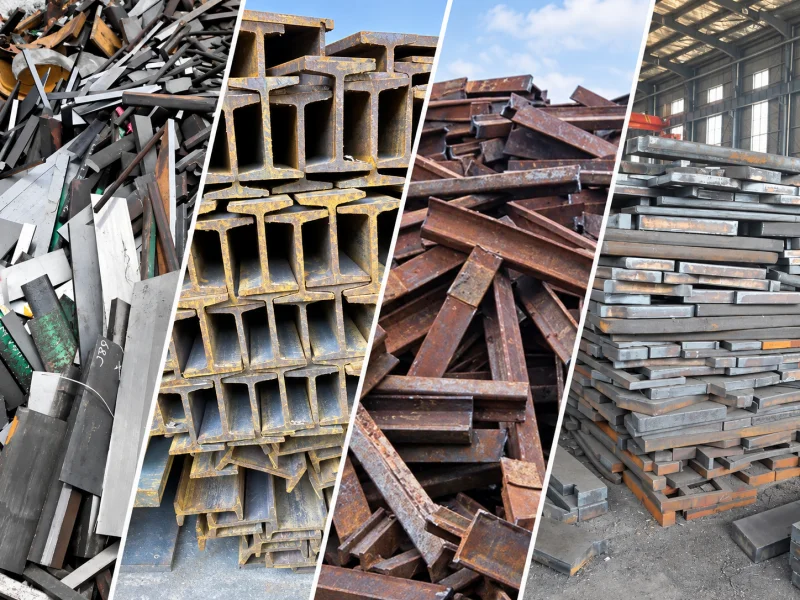
The main problem with this type of scrap is usually not low bulk density. More often, its original length, cross-sectional dimensions, or overall form does not meet the requirements for transport, equipment feeding, or the next process.
For this reason, heavy scrap processing is not about making the material as small as possible. The first step is to answer two questions:
- What exactly makes the current scrap unsuitable for the next process?
- Which dimensional factor needs to be changed, and to what extent?
If the material already meets transport and downstream requirements, there is no need to add unnecessary mechanical processing. If its length, cross-section, or overall dimensions are unsuitable, the next step is to determine—based on material, form, and target size—whether it can be sheared directly or requires pretreatment first.
TITAN evaluates the material, length, cross-sectional shape and dimensions, individual-piece structure and weight, throughput, and downstream requirements to determine whether the scrap is suitable for direct mechanical shearing and to discuss the corresponding size-adjustment route.