
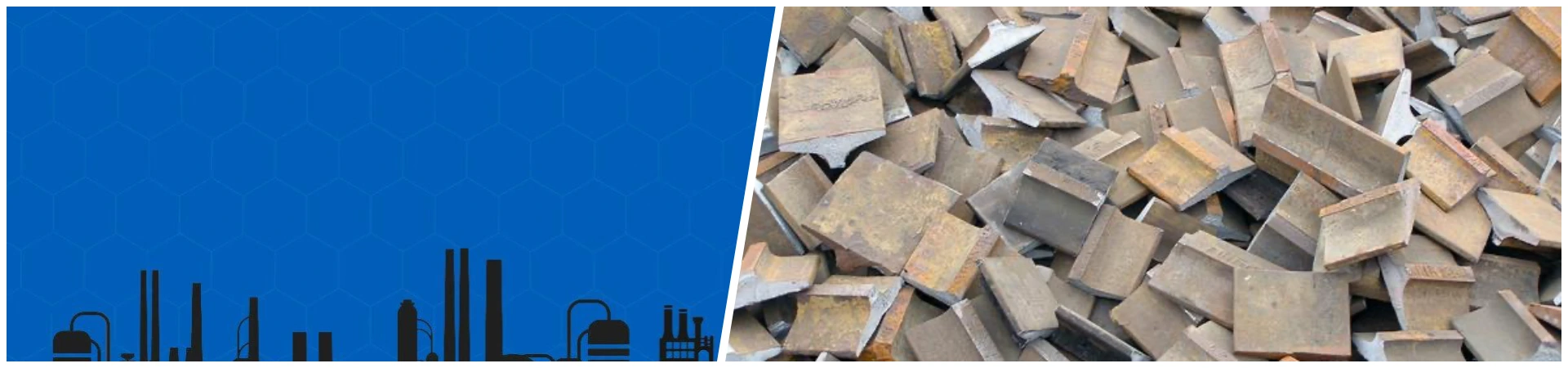
Different Forms of Steel Scrap Required Reliable Shearing
Steel scrap with different cross-sections and forms could not be handled efficiently through manual operations alone. The customer needed a reliable machine for routine cold shearing.
The customer is a small-to-medium-sized steel scrap processing company that needs to handle round bars, square bars, steel channels, I-beams, steel plates, steel pipes, and other forms of steel scrap on a regular basis.
Given the scale of the operation and the available equipment budget, the customer did not require a large gantry shear. At the same time, the company wanted to avoid traditional mechanically driven shearing equipment that was larger, heavier, and less flexible to operate.
The main requirement was to establish reliable cold-shearing capacity while keeping equipment investment under control. Long or awkwardly shaped steel scrap needed to be cut into sizes more suitable for subsequent handling, storage, transport, and recycling.
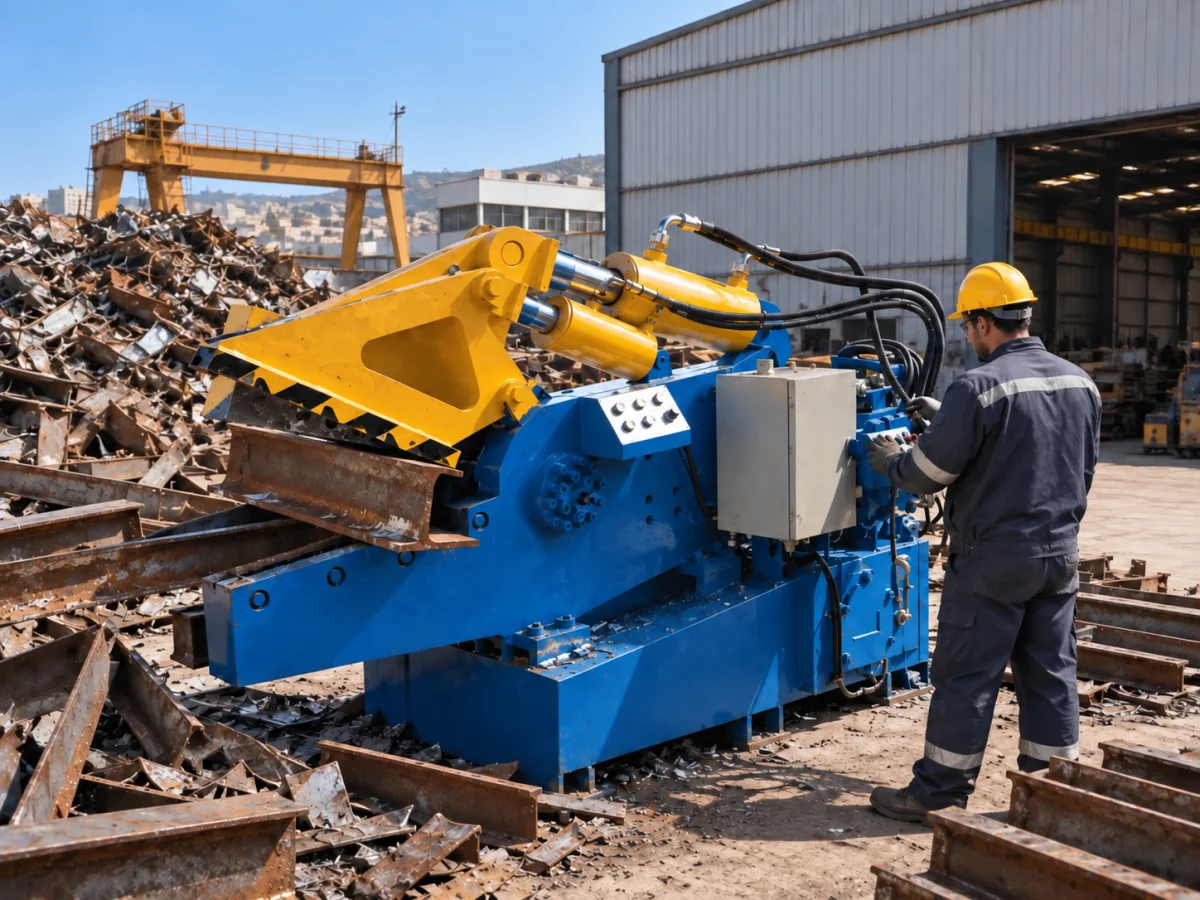
The project therefore uses a Q43-5000 Hydraulic Alligator Shear for cold shearing of different forms of steel scrap.
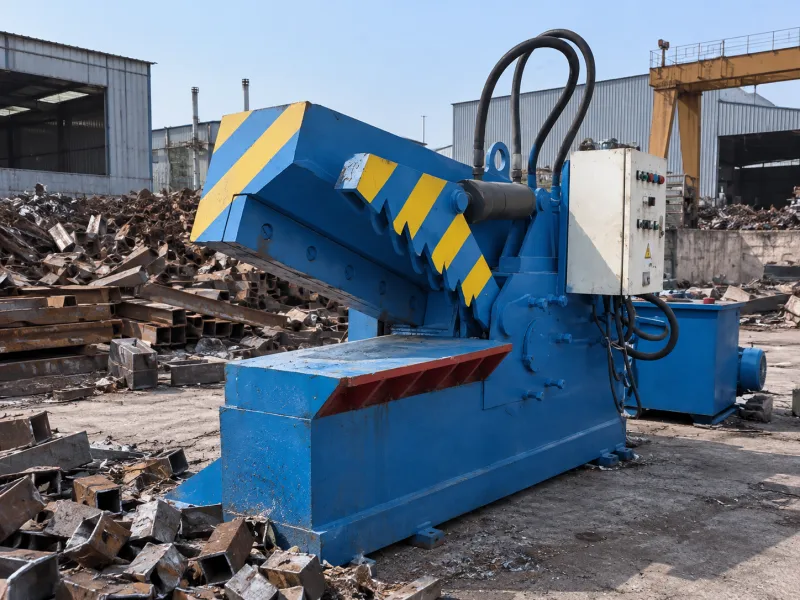
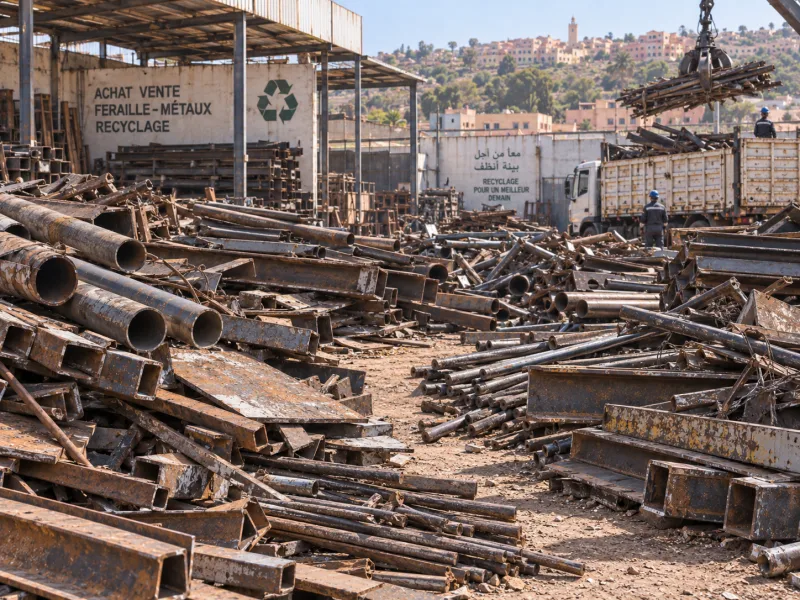
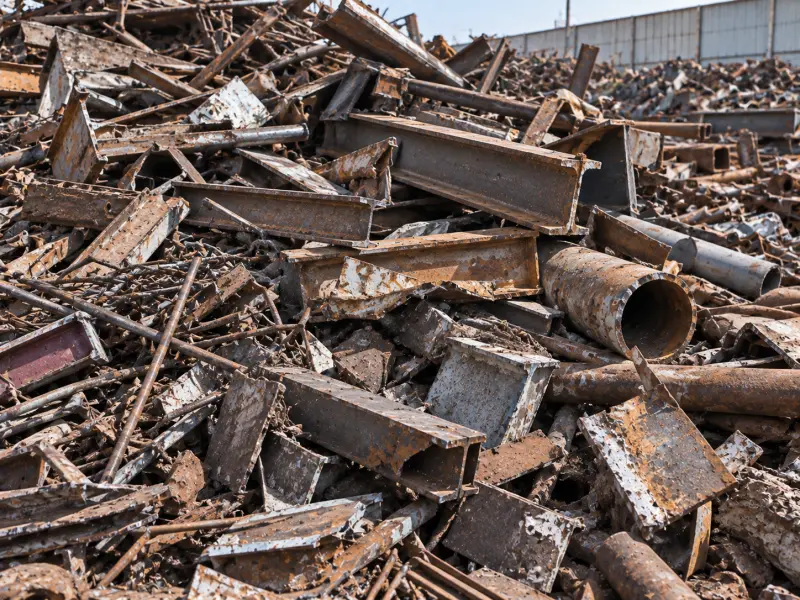
The customer was not processing one standardized type of steel scrap. Feed materials included round bars, square bars, steel channels, I-beams, steel plates, and steel pipes.
These materials differed in length, cross-section, and physical form and needed to be mechanically sheared into sizes more suitable for downstream recycling operations.
Steel scrap with different cross-sections and forms could not be handled efficiently through manual operations alone. The customer needed a reliable machine for routine cold shearing.
As a small-to-medium-sized steel scrap processor, the customer did not require the investment or operating scale of a large gantry shear. The customer needed a machine better suited to the actual processing scale.
The traditional mechanically driven shearing equipment considered by the customer was relatively large and heavy, with high inertia, high noise levels, and less flexible operation. This did not match the customer’s objective of improving day-to-day operating conditions.
The key to this project was not selecting a larger machine, but finding the right balance between actual processing scale, shearing capability, and equipment investment.
For round bars, square bars, steel channels, I-beams, steel plates, and steel pipes, the main requirement was to reduce length and overall dimensions.
The objective was not to shred the material into small fragments or simply compress its volume.
Hydraulic shearing was therefore selected as the primary processing route.
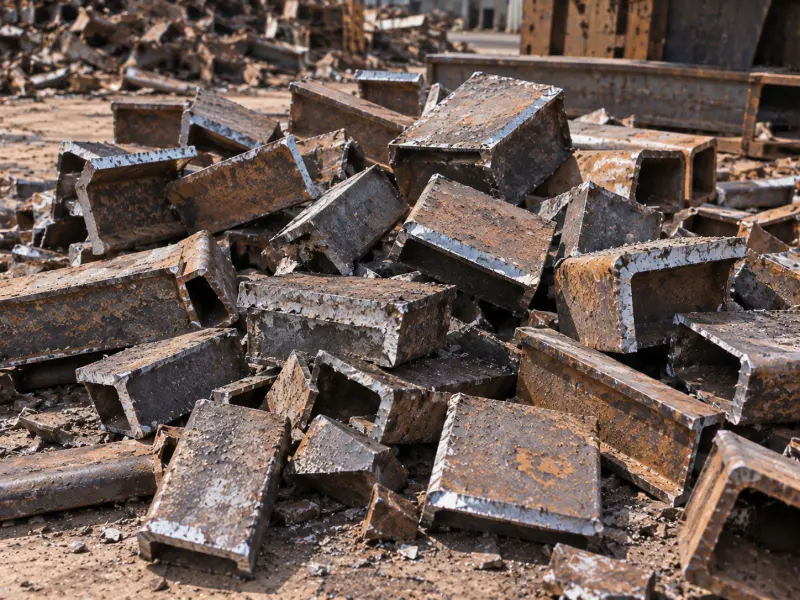
After the steel scrap is positioned in the Q43-5000 Alligator Shear, the hydraulic system drives the clamping and shearing process. Long or hard-to-handle material is cold-sheared into sizes more suitable for subsequent handling, storage, transport, and recycling.
The project uses a Q43-5000 Hydraulic Alligator Shear for cold shearing of different forms of steel scrap.
The hydraulic system drives the shear blade to clamp and cut material in the shearing area. Compared with the traditional mechanically driven shearing equipment originally considered by the customer, the hydraulic system was better suited to the project’s requirements for operating flexibility and routine steel scrap processing.
In this project, the Q43-5000 is primarily used to process different forms of steel scrap, cutting oversized or difficult-to-handle material into sizes more suitable for subsequent operations.
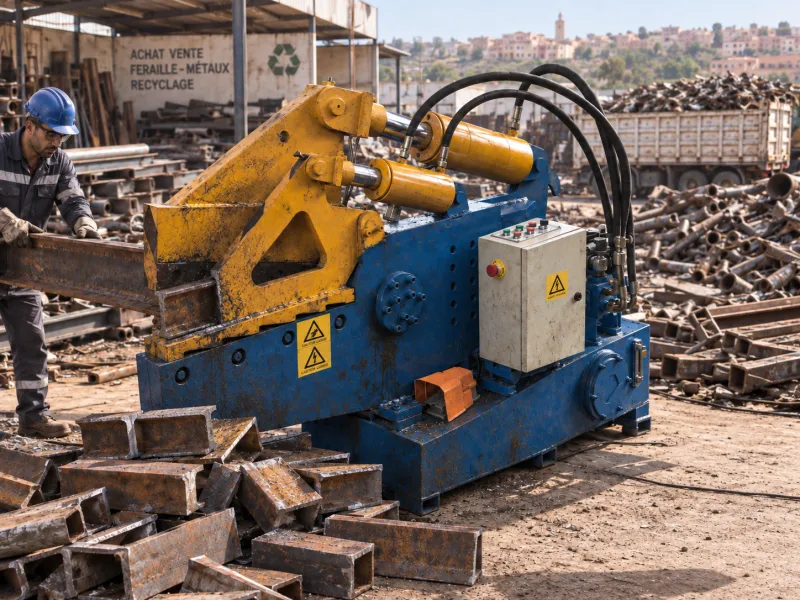
After commissioning, the Q43-5000 began handling routine cold shearing of different forms of steel scrap at the customer’s facility.
According to the project’s operating records, the machine can shear more than 10 tonnes of steel scrap during one 8-hour shift.
At the same time, each machine requires only two operators, allowing the customer to carry out routine steel scrap shearing with a relatively small operating team.
The project established mechanized shearing capacity matched to the customer’s actual production scale, meeting the current steel scrap processing requirement without installing a large gantry shear.
More than 10 tonnes of steel scrap can be sheared in one 8-hour shift.
One Q43-5000 is operated by two people.
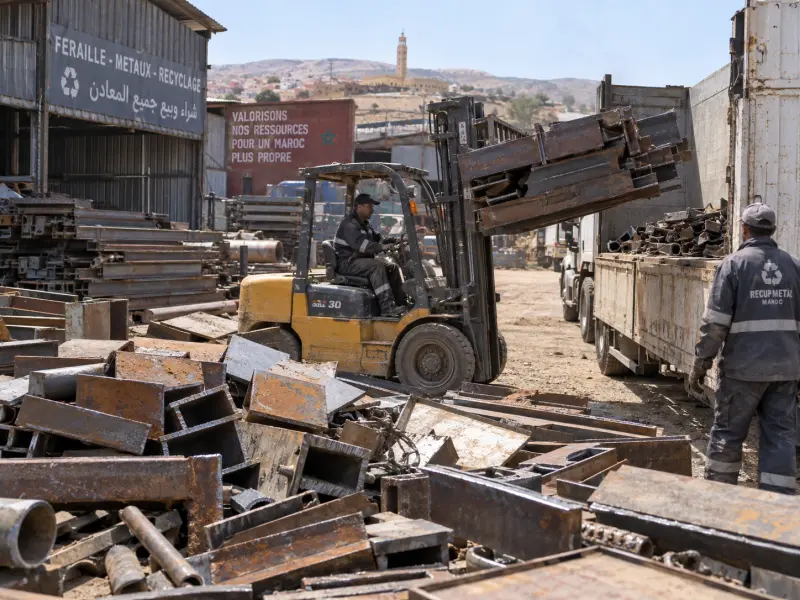
The project handles round bars, square bars, steel channels, I-beams, steel plates, and steel pipes through cold shearing.
The project established mechanized shearing capacity suitable for a small-to-medium-sized steel scrap processing operation while keeping equipment investment under control.
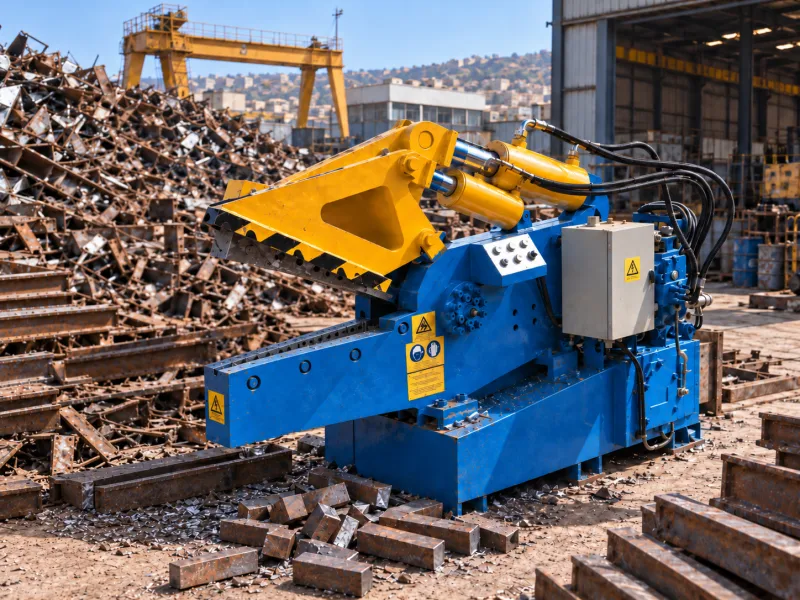
Q43 alligator shear for bars, profiles, pipes and medium-size scrap, with seven models from 1,200 to 5,000 kN cutting force.
View Equipment →Evaluate length, cross-section, overall form, and downstream target size to determine whether heavy scrap needs direct shearing, pretreatment, or no further size reduction.
View Solution →