Algeria | Copper Chip Crushing & Briquetting Project

Project Overview

Algeria Oily Copper Chips Crushing and Briquetting Project

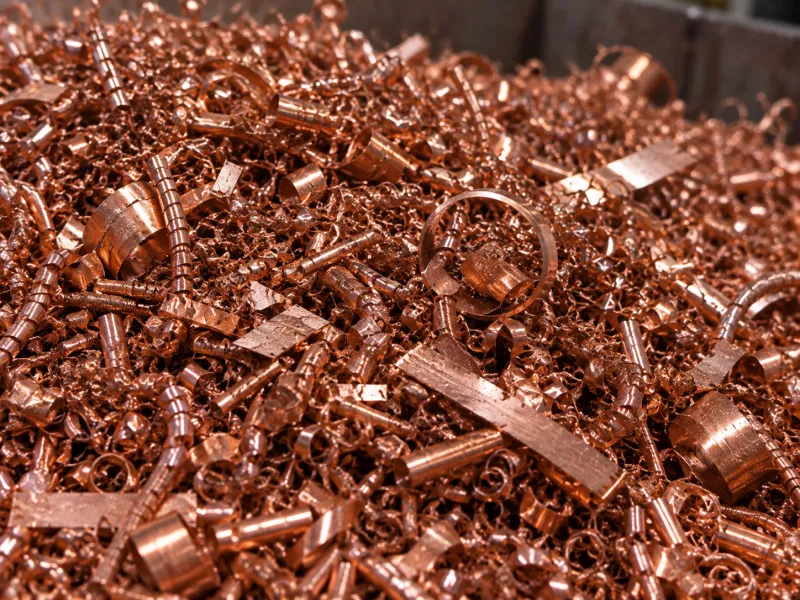
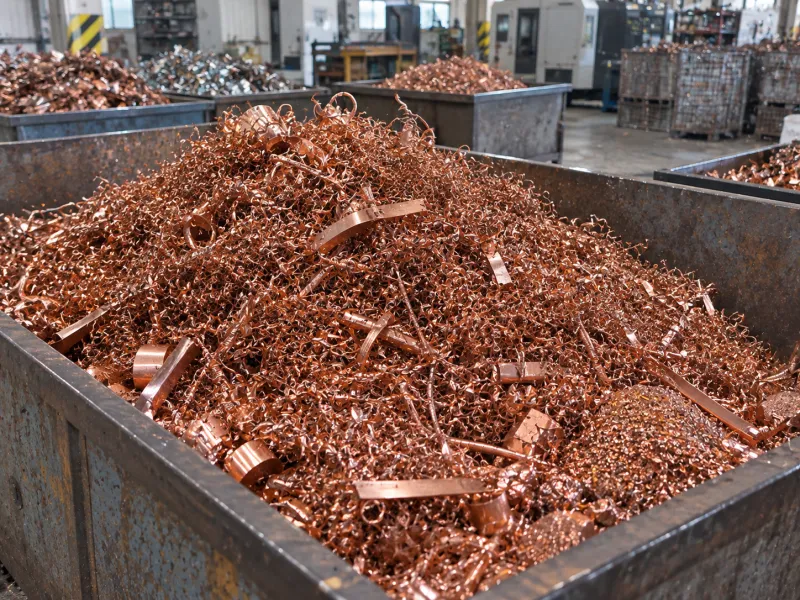
The customer is a metalworking company that continuously generates stringy, clumped copper chips with residual cutting oil.

Before this project, the chips were stored loose. Their high bulk volume took up valuable workshop space, while residual oil drained from the material, contaminating the floor and adding to housekeeping and cleanup work. Once enough material had accumulated, a third-party recycler collected it for purchase, leaving the customer with limited control over the value recovered from the scrap and the price received.

The condition of the material also created a processing problem. Long, clumped chips were not suitable for direct briquetting because they could not be fed consistently without first improving their size and form. Feeding loose chips directly into the subsequent melting process also made furnace charging more difficult and increased oxidation loss.

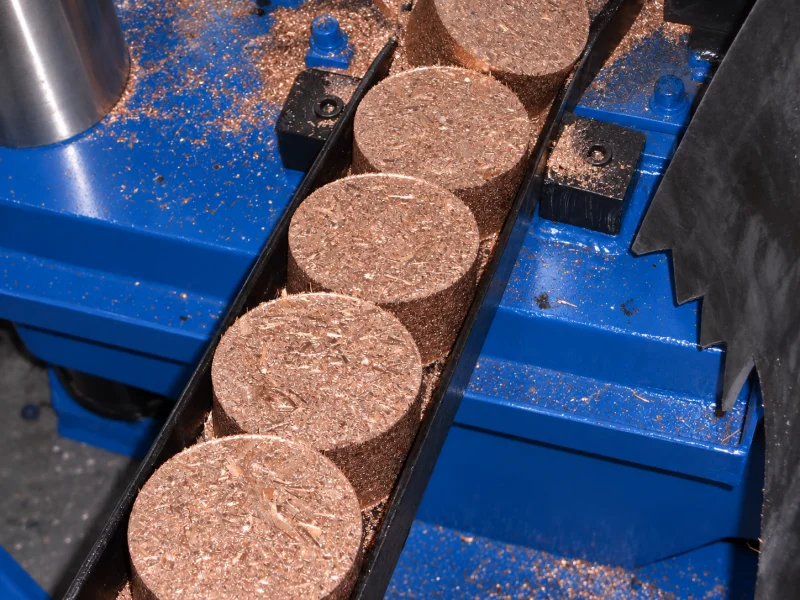
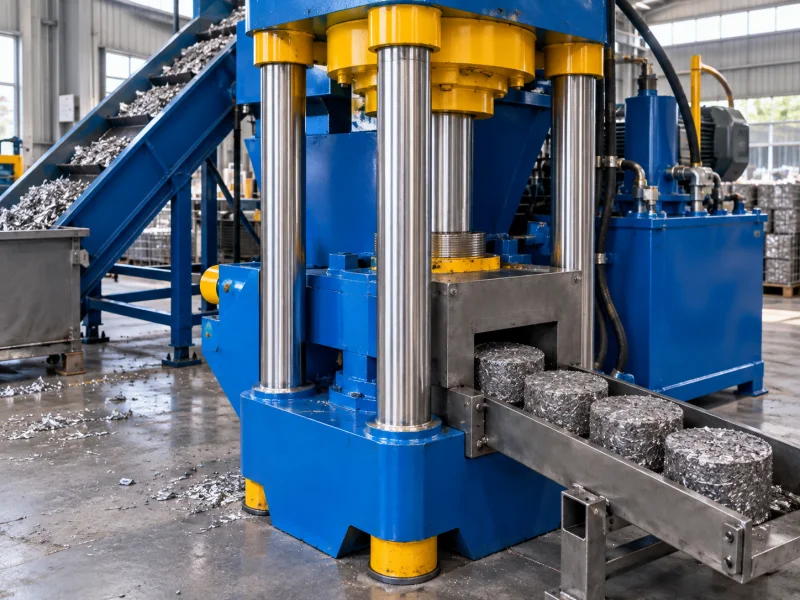
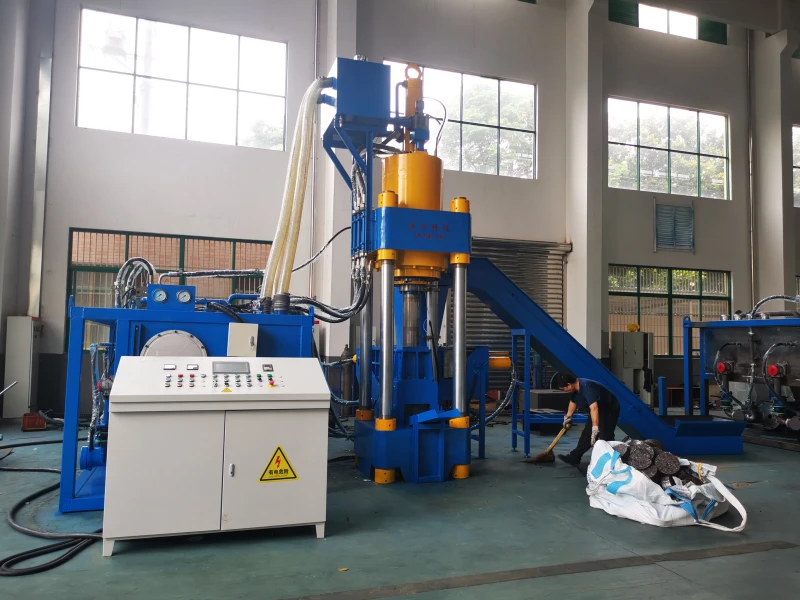
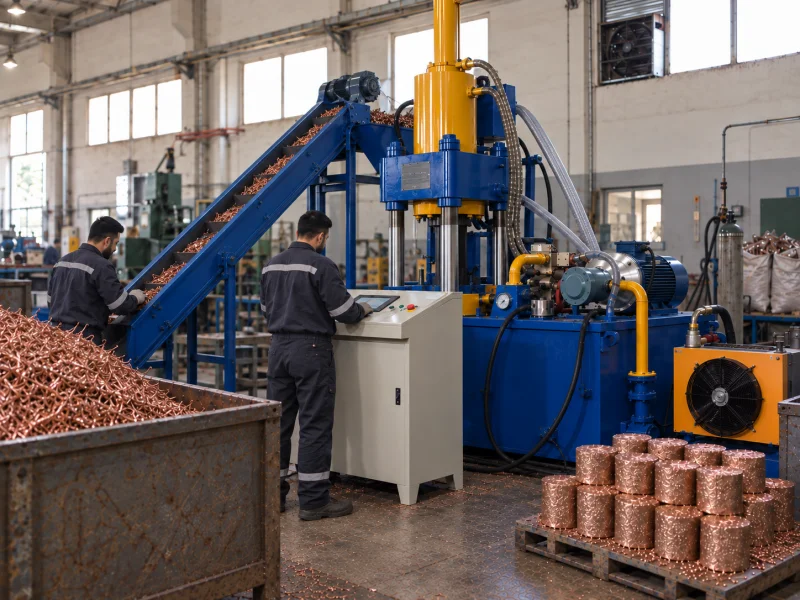
TITAN therefore configured the project around two main processing stages: chip crushing followed by metal briquetting. The long and clumped chips are first reduced to a shorter, more uniform form. After residual-oil treatment, the copper chips are cold-pressed under high pressure in a Y83L-250 Metal Briquetting Machine to produce cylindrical copper briquettes.

Algeria Oily Copper Chips Crushing and Briquetting Project
Country / Region
Algeria
Customer Industry
Metalworking
Material
Copper chips
Incoming Condition
Stringy, clumped, with residual cutting oil
Equipment
Chip crusher + Y83L-250 Metal Briquetting Machine
Project Objective
Improve feed consistency for long and clumped copper chips, reduce their loose bulk volume, and produce copper briquettes better suited to storage, transport, and remelting
Volume Reduction Ratio
Approx. 10:1
Key Project Result
The customer realized approximately USD 350–450 more per tonne from copper briquettes than from loose copper chips
Why These Copper Chips Needed Pretreatment Before Briquetting
Processing Challenge

Why These Copper Chips Needed Pretreatment Before Briquetting

The challenge was not simply their high bulk volume. The incoming chips were long, clumped, tangled in places, and carried residual cutting oil.

Sending the material directly to a briquetting machine would therefore have left three issues unresolved: inconsistent feeding, residual-oil handling, and preparation for subsequent remelting.

01

Long, Tangled Chips Made Stable Feeding Difficult

Stringy and clumped copper chips do not flow as consistently as shorter, more uniform material. Fed directly into the briquetting stage, their irregular form can interfere with continuous and stable feeding. The chips therefore needed to be reduced to a more consistent size before briquetting.
02

Loose Chips Occupied Too Much Space

Without briquetting, copper chips have a high bulk volume. This increased the workshop space needed for storage and the volume required for outbound transport.

03

Residual Cutting Oil Added to Housekeeping and Cleanup Work

When oily copper chips were stored loose or outdoors, residual liquid could drain from the material and contaminate the surrounding floor area. This meant more housekeeping and cleanup and made environmental management at the site more demanding.

04

Loose Chips Were Less Suitable for Direct Remelting

When loose, stringy and clumped copper chips were charged directly into the furnace, they took longer to melt. Oxidation loss was also higher, resulting in greater copper loss during melting.

The engineering task therefore involved more than briquetting alone: the incoming chips first had to be conditioned for stable processing, then formed into dense briquettes.

Processing Approach

Crush for Stable Feeding, Then Briquette for Volume Reduction and Remelting

Because the incoming copper chips were long and clumped, chip crushing was added as the first stage of the process.

The chip crusher reduces the material to shorter, more uniform pieces, creating a more consistent feed for downstream briquetting.

Once the residual oil has been treated as required, the chips enter the Y83L-250 Metal Briquetting Machine, where they are cold-pressed under high pressure into cylindrical copper briquettes.

For this project, the recorded volume reduction ratio was approximately 10:1. No heating is used during briquetting, and no forming additive is added.

01Stringy / Clumped Copper Chips with Residual Cutting Oil
02Chip Crushing
03Shorter, More Uniform Copper Chips
04Residual-Oil Treatment
05High-Pressure Briquetting with Y83L-250
06Approx. 10:1 Volume Reduction Ratio
07Cylindrical Copper Briquettes
08Storage, Transport, and Subsequent Remelting
Equipment & Project Configuration

Two Processing Stages: Chip Crushing and Y83L-250 Briquetting

The project uses a two-stage process rather than a single-machine solution.

The first stage addresses chip size and feeding condition. A chip crusher reduces the long and clumped copper chips to a shorter, more uniform form that can be fed more consistently into the next stage.

The second stage uses the Y83L-250 Metal Briquetting Machine. After residual-oil treatment, the copper chips are cold-pressed under high pressure into cylindrical briquettes.

Stage 01 | Chip Crushing

Chip crusher

Material
Long and clumped copper chips
Main Function
Reduce the chips to a shorter, more uniform form for stable downstream feeding and briquetting
Stage 02 | Metal Briquetting

Metal Briquetting Machine

Model
Y83L-250
Material
Copper chips after residual-oil treatment
Main Function
High-pressure cold pressing, volume reduction, and production of cylindrical copper briquettes

Y83L-250 Standard Model Specifications

Maximum Main-Cylinder Force
2500 kN
Briquette Diameter
80–120 mm
Drive Power
22 kW
Reference Throughput for Copper Chips
<0.5 t/h
View Equipment
Two Processing Stages: Chip Crushing and Y83L-250 Briquetting
Project Results

Approx. 10:1 Volume Reduction and USD 350–450/t Higher Realized Value

Once the system was commissioned, the original stringy, clumped and bulky copper chips were first crushed, followed by the appropriate residual-oil treatment, before entering the Y83L-250.

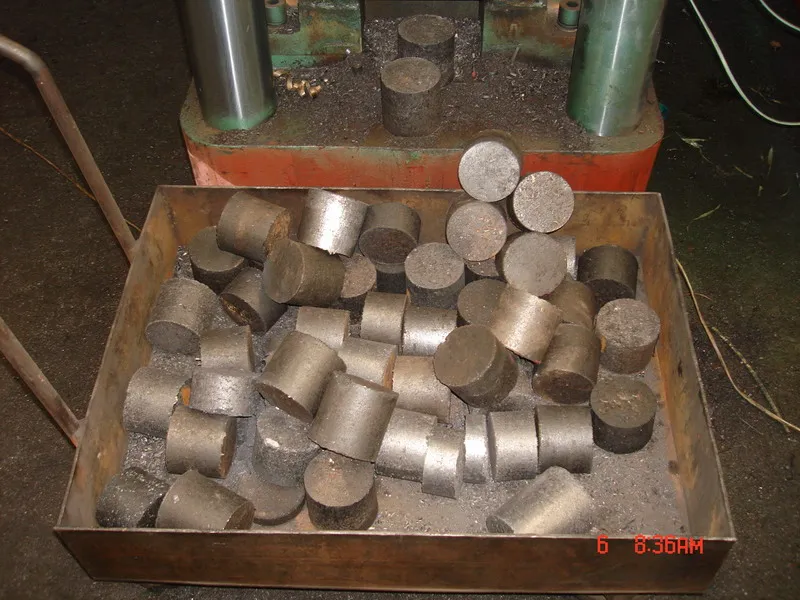
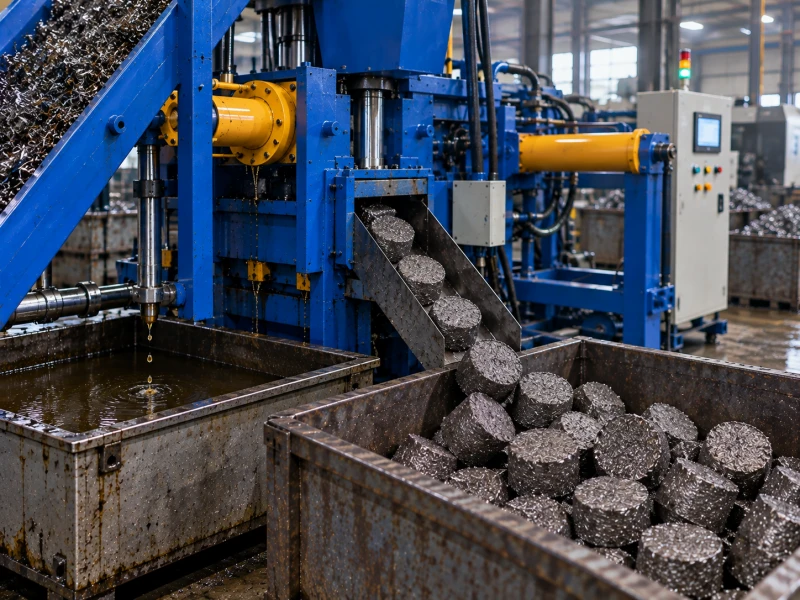
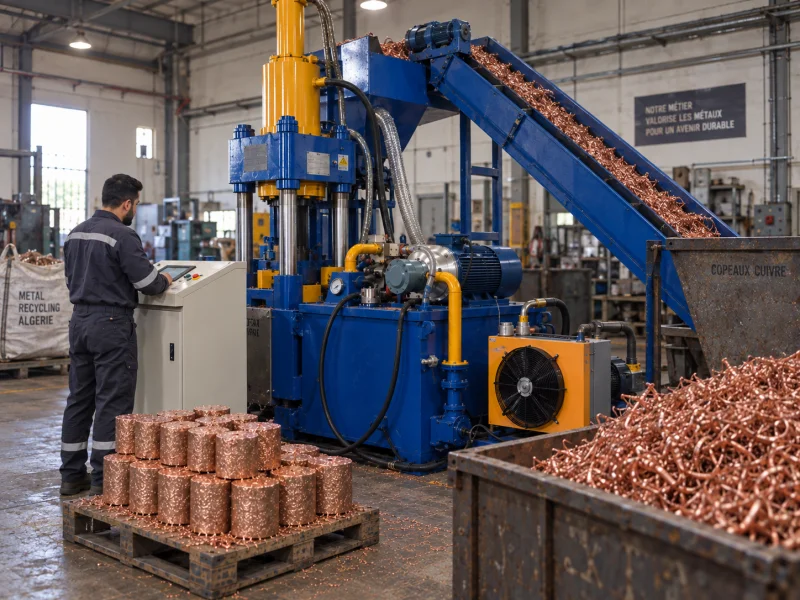
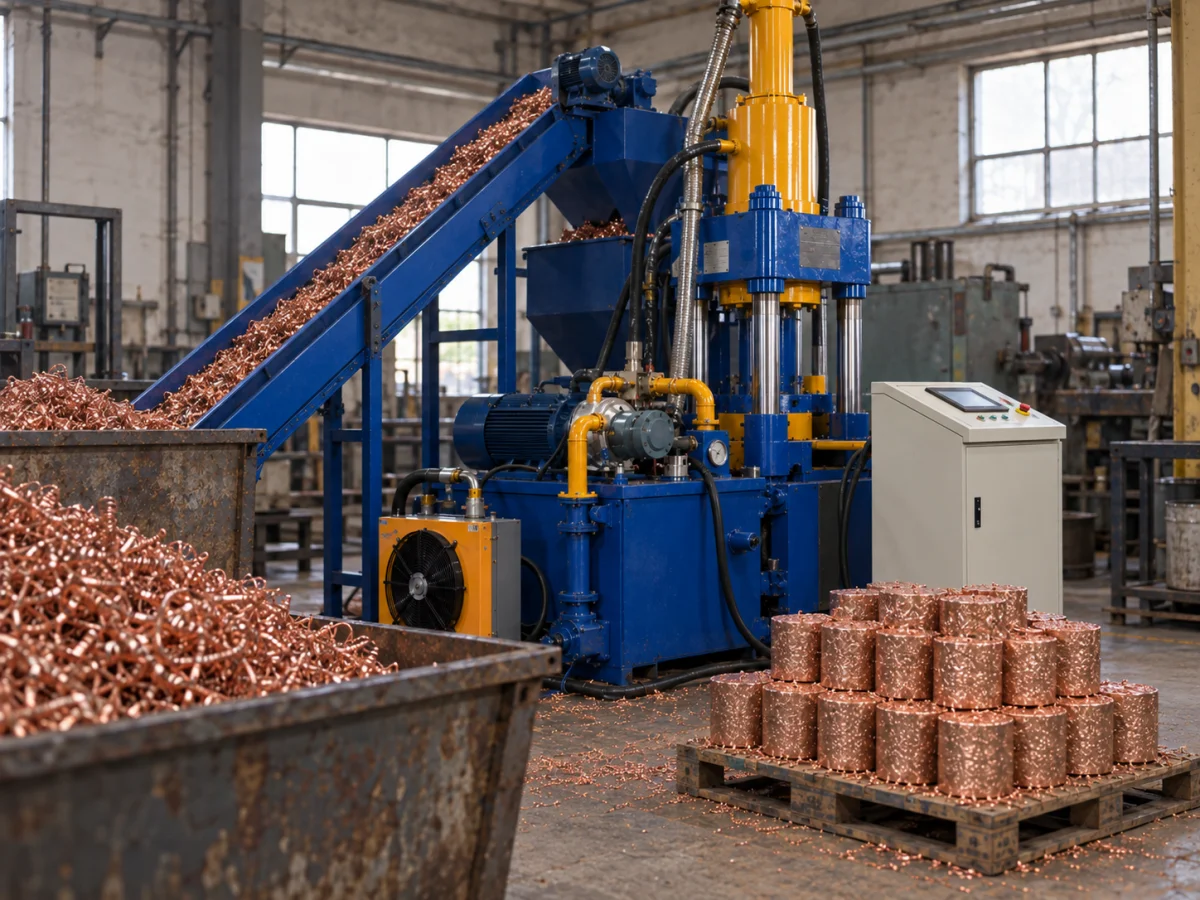
The machine then cold-pressed the chips into compact cylindrical briquettes under high pressure.

The project recorded a volume reduction ratio of approximately 10:1, substantially reducing the space occupied by the original loose material.

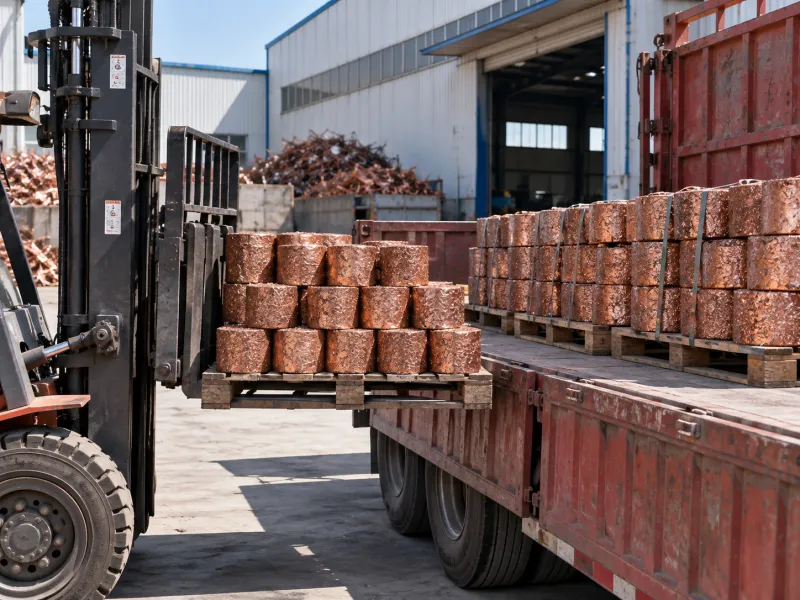
The more compact form also improved storage, transport, and furnace charging. The customer realized approximately USD 350–450 more per tonne from copper briquettes than from loose copper chips.

During subsequent melting, the briquettes were easier to charge into the furnace, oxidation loss was noticeably lower, and melting efficiency improved.

≈10:1

Volume Reduction Ratio

High-pressure briquetting converted the loose copper chips into a much more compact form.

+350–450 USD/t

Higher Realized Value per Tonne

In this project, the customer realized approximately USD 350–450 more per tonne from copper briquettes than from loose copper chips.

Lower Oxidation Loss

Remelting Performance

Oxidation loss was noticeably lower after the copper chips were briquetted and returned to the furnace.

Easier Furnace Charging

Material Condition

Cylindrical copper briquettes are easier to store, transport, and charge into the furnace than loose, stringy and clumped chips.

On-Site Evidence

From Loose Copper Chips to Compact Briquettes

Related Projects

More Scrap Metal Processing Projects

Related Equipment & Solution

Explore the Equipment and Processing Routes Behind This Project