What Is the Difference Between a Metal Briquetting Machine and a Scrap Metal Baler?
A Metal Briquetting Machine and a Scrap Metal Baler both use pressure to reduce the volume of scrap metal and form a compressed product, so the two types of equipment are easily grouped together.
But they solve different scrap-processing problems.
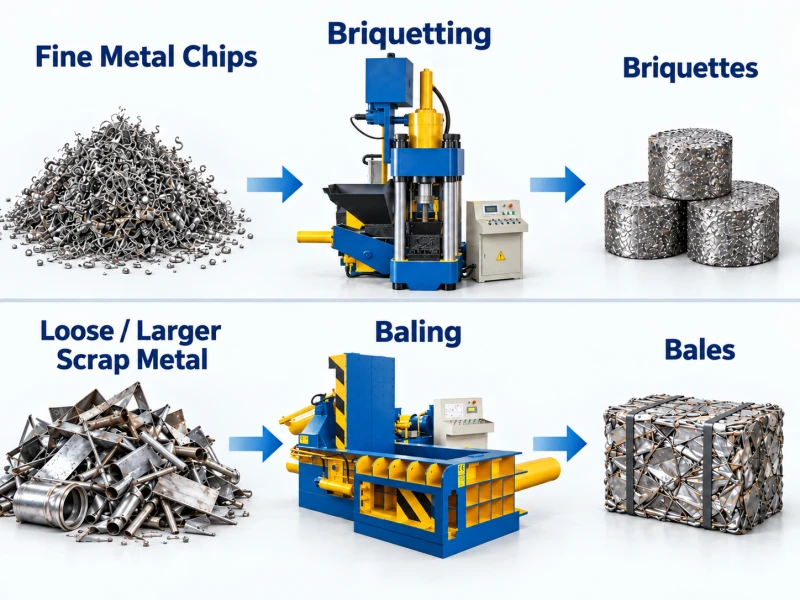
A metal chip briquetting machine is mainly used to further compact and form fine scrap metal that is suitable for briquetting. A metal baler is mainly used to consolidate larger, loose, or irregularly shaped scrap metal into bales.
When distinguishing between the two, therefore, the most important question is not which machine applies more pressure, nor whether the scrap is aluminium, copper, or steel.
The first question is:
The Two Machine Types Are Designed for Different Feed Conditions
The typical feedstock handled by a metal chip briquetting machine is usually already in a relatively fine form.
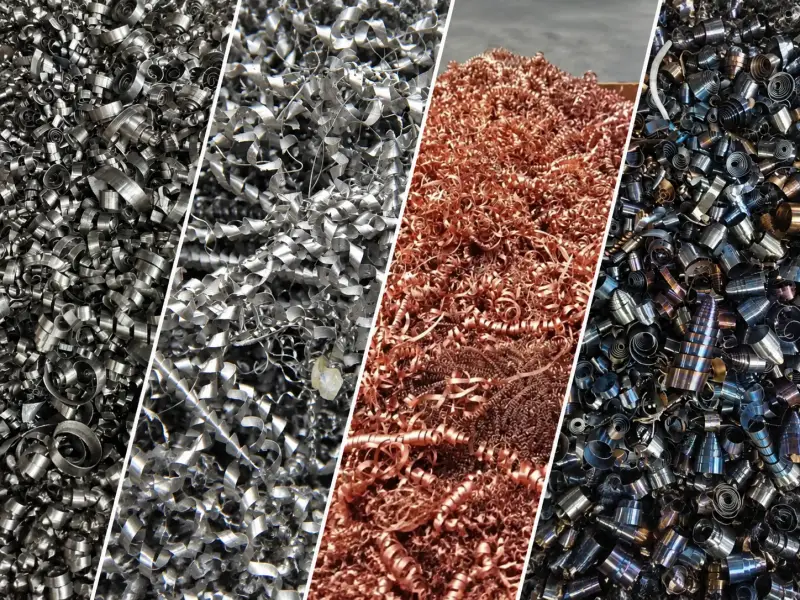
Examples include granular metal chips, short broken chips, fine machining chips, turnings that can be fed reliably, and certain fine particulate or powder-form metal wastes that are suitable for high-pressure forming.
The individual pieces are relatively small, but when piled loosely they contain a large amount of void space.
The main processing objective is not to fold or squeeze whole pieces of scrap together. It is to bring a large quantity of fine chip material closer together, compact it, and form it into a stable solid body.
A Scrap Metal Baler, by contrast, normally handles a different physical state of scrap.
Thin-sheet offcuts, sheet metal, metal containers, and other larger light-gauge or irregular scrap already have a certain individual size, but because they are loose and stack irregularly, they occupy substantial overall volume.
This type of scrap is more suitable for loading into a larger feed box or baling chamber and then being compressed as a whole to reduce its volume and form a regular bale.
The difference at the input side can therefore be summarised as follows:
A metal chip briquetter mainly addresses material that is fine and loose.
A metal baler mainly addresses material that is larger, bulky, and irregular.
This difference then affects the compression structure used by each machine and the type of compressed product ultimately formed.
Different Feed Conditions Lead to Different Compression Methods and Formed Products
Because the two machines handle different feed materials, they also differ clearly in their compression space and final product.
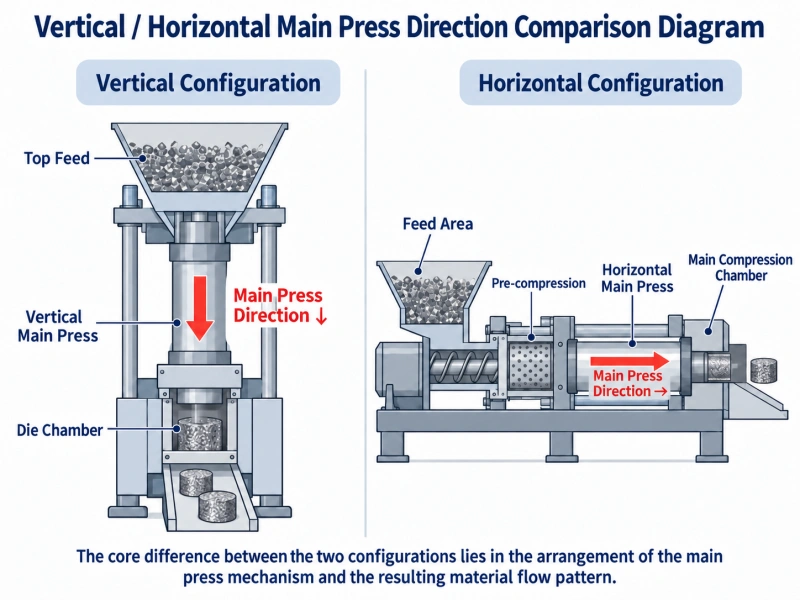
The briquetting machine needs to feed fine metal chips into a relatively confined forming space. High pressure further reduces the voids between the chips, and the material forms a metal briquette with a defined cross-section and dimensions under die constraint.
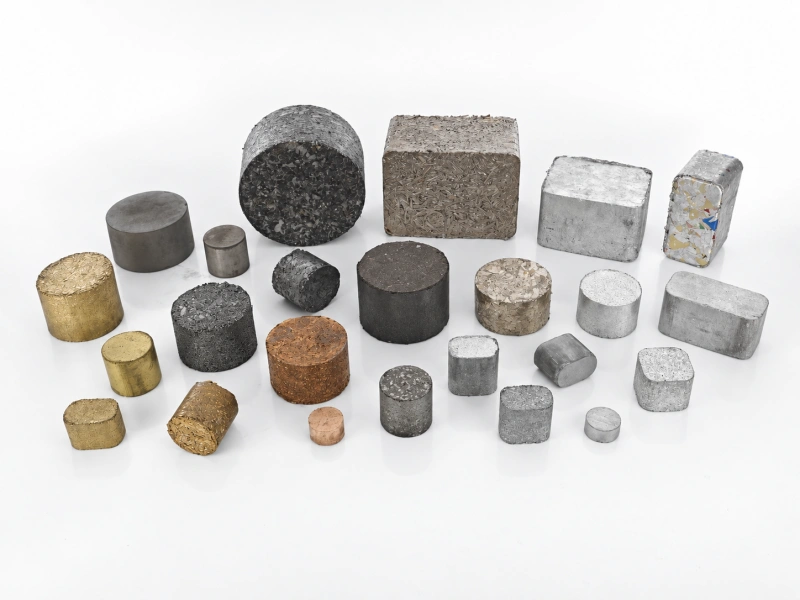
This formed product is typically called a briquette.
For metal chips carrying a certain amount of cutting or lubricating fluid, part of the liquid can also be squeezed out during pressing and collected through the corresponding structures.
The metal baler, on the other hand, normally receives larger loose scrap in a feed box or baling chamber. Its compression mechanism consolidates the material into a confined space as a whole, ultimately forming a metal bale that is easier to stack and transport.
This compressed product is typically called a bale.
The two machine types can be summarised as follows:
| Comparison | Metal Briquetting Machine | Scrap Metal Baler |
|---|---|---|
| Main feed material | Fine scrap such as metal chips, turnings, and machining chips | Larger, lightweight, or irregular loose scrap metal |
| Typical material condition | Granular, short broken, fine chip material, and some powder-form metal waste | Thin sheet, offcuts, metal containers, and other larger scrap |
| Main compression method | Compaction and forming within a confined die space | Overall compression inside a feed box or baling chamber |
| Typical product | Metal briquette — briquette | Scrap-metal bale — bale |
| Liquid-bearing chips | Part of the liquid can be separated and collected during pressing | Solid-liquid separation is not a primary design objective |
A briquette and a bale are therefore not simply two different names.
They correspond to different feed conditions, compression processes, and final formed products.
The Same Metal Can Still Require Different Compression Equipment
The same material does not necessarily mean the same scrap condition.
Take aluminium as an example.
Fine aluminium chips, short aluminium chips, and other fine chip material suitable for briquetting can be further densified through briquetting and formed into aluminium briquettes.
Aluminium cans, thin aluminium sheet offcuts, and other larger light-gauge aluminium scrap start from a completely different physical condition and require a different feeding approach. They are closer to the type of material handled by a metal baler.
The same applies to ferrous scrap.
Fine iron chips and short steel chips are physically different from sheet metal, steel plate offcuts, or larger structural steel scrap, even though all of them are ferrous materials.
As a result, the processing problem that needs to be solved is also different.
This shows that equipment type cannot be determined simply from material names such as “aluminium”, “copper”, or “steel”.
The material tells us what metal is being handled.
Its physical form further determines how that metal should enter the compression process.
Why Are Long Stringy Turnings a Common Grey Area Between the Two Machine Types?
Real scrap does not always fall neatly at one of two extremes: “fine chip material” or “large scrap”.
Long stringy turnings are a typical example.
Steel turnings, curled aluminium chips, and other long, curled metal chips generated during continuous machining are still metal chips in terms of their source and material category.
But they can also be extremely bulky, become entangled with one another, and form large chip nests.
In this situation, it is not accurate to decide that a metal chip briquetting machine must be used simply because the material is classified as chips.
Different actual conditions of long turnings can lead to different processing paths.
Some bulky, curled, or heavily tangled long chip material may fall within the processing range of a metal baler.
Other long turnings may still enter the briquetting process if they can be fed reliably, or if cutting, crushing, or other pretreatment brings them into a condition suitable for feeding and pressing.
The distinction between the two machine types therefore cannot be simplified to:
The actual decision also depends on the scrap's physical size, degree of curling and entanglement, loose or bulky condition, feeding requirements, and the desired final compressed form.
For more detail on when different metal-chip conditions are ready for direct briquetting and when further treatment is required, see “Which Metal Chips Are Suitable for Briquetting?”
A Metal Briquetting Machine and a Scrap Metal Baler are not distinguished by which one has greater tonnage or stronger compression capability.
They are two scrap-metal compression approaches designed for different material conditions.
Looking first at the actual condition of the scrap and then determining how it should be compressed is closer to real recycling practice than choosing equipment purely from the name of the metal.
Before Choosing Briquetting or Baling, Check in This Order
Continue Learning About Metal Chip Briquetting