Core Technologies Behind Metal Chip Briquetting

Core Technologies Behind a Metal Briquetting Machine: Stable Briquetting Takes More Than Higher Pressure

Technical Review:Peter Liu · Mechanical Engineer | TITANLast Updated:September 13, 2026

The final task of a Metal Briquetting Machine may appear simple: compress loose metal chips into dense briquettes.
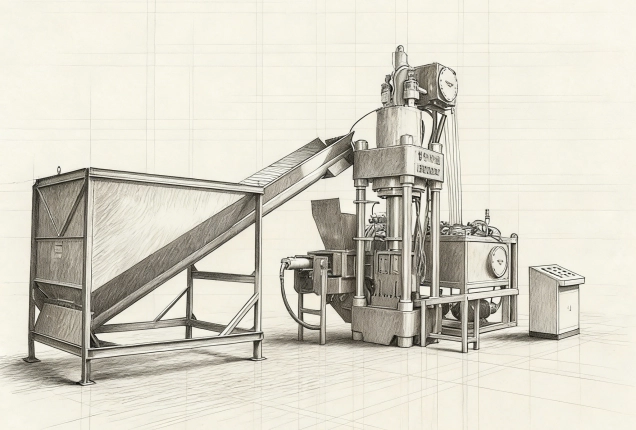
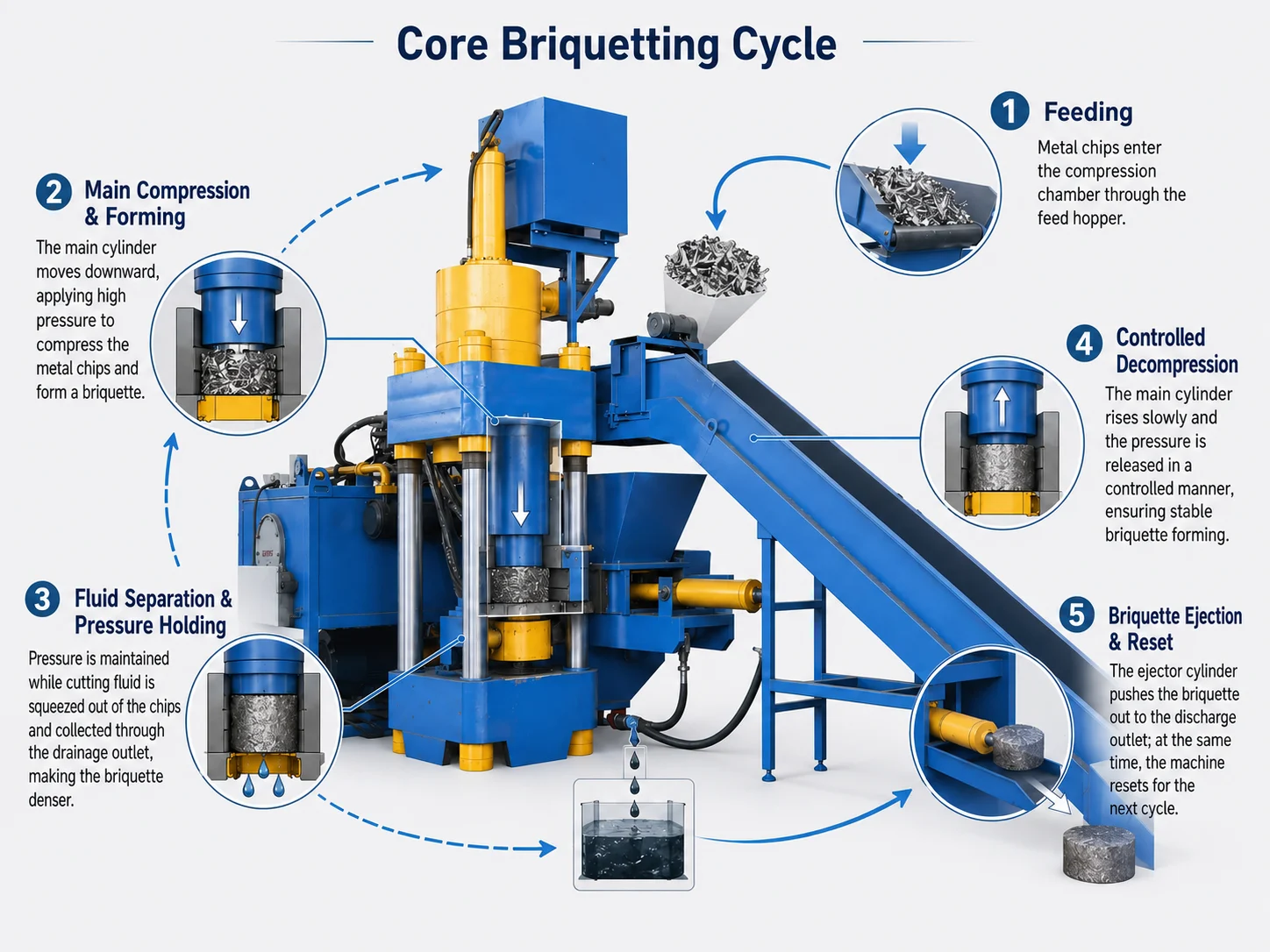
But achieving stable feeding, sufficient compaction, consistent briquette formation, and smooth discharge after a high-pressure cycle requires more than simply applying “more pressure.” What actually determines the briquetting process is the coordination of several technologies. Depending on the machine structure and material conditions, these commonly include high-pressure cold pressing and forming, stable feeding and pre-compression, die constraint, pressure holding and controlled decompression, solid-liquid separation, and hydraulic control. These technologies do not solve the same problem.
Core Technologies Behind a Metal Briquetting Machine: Stable Briquetting Takes More Than Higher Pressure
Some are responsible for bringing the material to a sufficient level of compaction, some control the forming condition, some help maintain a stable high-pressure cycle, and others handle liquid squeezed out during compression. Understanding the core technologies behind a metal briquetting machine therefore requires a clear distinction between machine tonnage and the actual pressing conditions acting on the material.

High-Pressure Cold Pressing: From Compaction to Briquette Formation

Metal chip briquetting uses cold pressing under mechanical pressure. Under material conditions suitable for briquetting, the process does not rely on heating to melt the metal, nor does it require altering the metal's material classification to form a briquette. As the available pressing space decreases, the voids within the loose metal chips are progressively reduced, and the material changes from a low-density loose bulk state into a denser consolidated mass. There is, however, an important misconception to avoid: The total pressing force of the machine is not the same as the actual compaction conditions experienced by the material. The effective pressing area must also be considered when evaluating the pressing effect. The compaction effect acting on each unit of effective pressing area can be expressed through specific compaction pressure. This is generally derived from the main pressing force and the effective pressing area. As a result, the same main pressing force can produce different actual compaction effects when the die dimensions and effective pressing area are different. This is why metal chip briquetting cannot be understood simply as “the higher the tonnage, the better the briquetting result.”

Three Engineering Quantities Must Not Be Confused

Hydraulic System Working Pressure

Describes the pressure state within the hydraulic circuit.

Main Pressing Force

The force applied to the material by the main pressing mechanism during the main pressing stage.

Specific Compaction Pressure

A compaction indicator representing the pressing effect acting on each unit of effective pressing area.

Stable Feeding and Pre-compression: Stabilising the Material Before High-Pressure Pressing

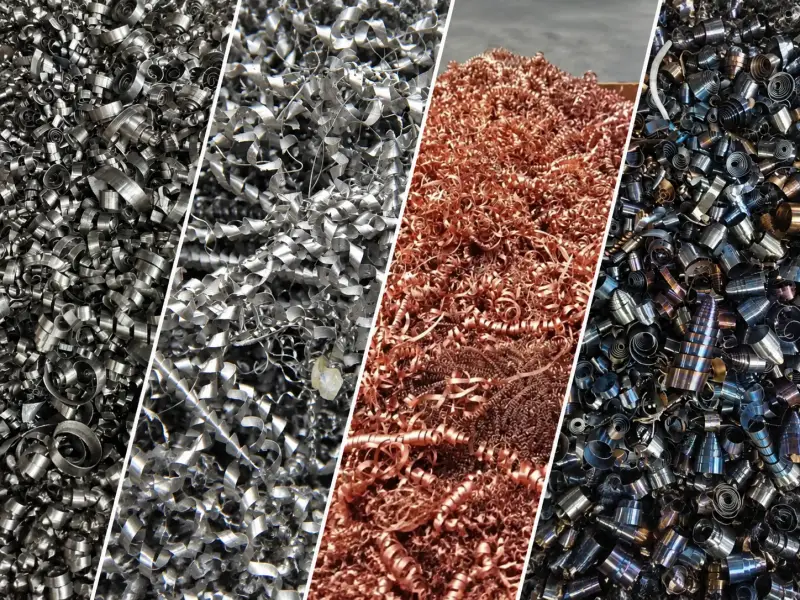
Metal chips behave differently from regular solid metal pieces. The same weight of chips can occupy very different volumes depending on their length, degree of curling, and looseness. If the condition of the material entering the main compression area fluctuates significantly, maintaining a stable high-pressure pressing process becomes more difficult. On machines equipped with a pre-compression function, pre-compression is intended primarily to address this issue. Before final main compression, the loose feed is initially compacted, conditioned, or stabilised so that the material entering the main compression area is more controllable. The technical value of pre-compression, therefore, is not simply to “press the material one more time.” Its purpose is to establish more stable feeding conditions for the subsequent pressing stage. It is also important to distinguish the process function from the mechanical structure. Pre-compression is a process function and does not refer to one fixed mechanical component. Different machine designs can achieve pre-compression in different ways.

Briquetting Die, Pressure Holding, and Controlled Decompression: Controlling How the Briquette Forms and Leaves the High-Pressure State

High pressure compacts the material, but stable forming also requires control over both the pressing space and the way pressure changes during the cycle.
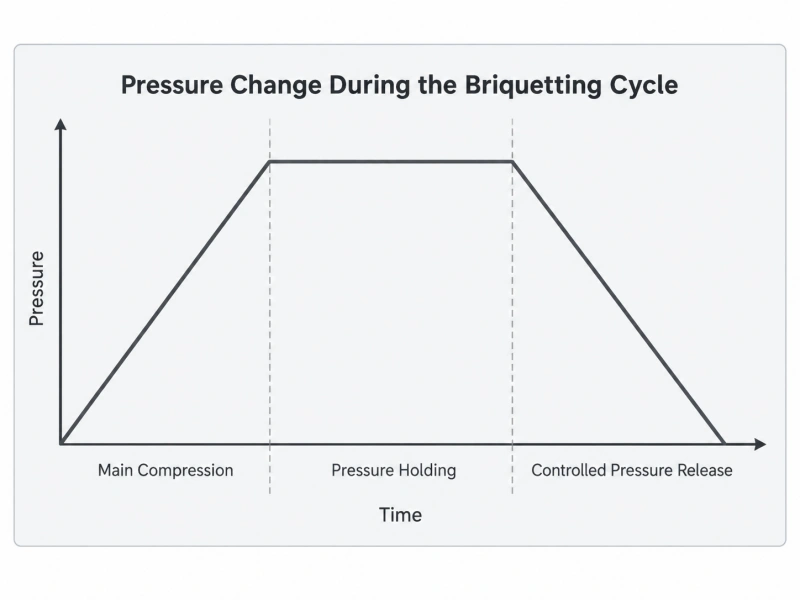
The briquetting die first provides the forming boundary. Under high pressure, the metal chips cannot move outward without restraint. Instead, they are progressively compacted within the confined space of the die. The die therefore determines the basic cross-section, dimensions, and shape of the finished briquette. Once the set pressure or pressing position has been reached, the machine enters the pressure-holding stage. Pressure holding does not mean continuing to increase the pressure without limit. It means maintaining the current pressure or pressing position for a defined period so that the compacted state already established can stabilise further.
Briquetting Die, Pressure Holding, and Controlled Decompression: Controlling How the Briquette Forms and Leaves the High-Pressure State
The machine must then transition from the high-pressure condition to the briquette-ejection stage. During this transition, releasing the pressure as quickly as possible is not necessarily desirable. By gradually reducing the pressure in the high-pressure circuit in a controlled manner, the hydraulic shock associated with rapid decompression and reversal can be reduced, creating a more stable condition for the actions that follow. This process is known as Controlled Decompression. Controlled decompression describes the way pressure is released. It does not refer to one fixed valve, device, or hydraulic circuit. The specific implementation depends on the hydraulic design of the machine. The briquetting process therefore involves not only building pressure, but also controlling how pressure is held and how it is released. Stages: Main Compression → Pressure Holding → Controlled Decompression

Solid-Liquid Separation and Liquid Collection: Handling Part of the Attached Liquid During Briquetting

Many metal chips are generated during cutting and machining operations and may carry cutting fluid, lubricating fluid, or other process liquids on their surfaces.

When these chips are compressed under high pressure, part of the liquid present between the chips can be squeezed out.

For briquetting equipment intended to process metal chips carrying liquid, the design therefore needs to consider more than the compaction structure itself. It also needs to provide a path for the liquid to drain and a liquid-collection structure to collect the separated fluid.

A clear boundary is important here:

Briquetting can squeeze out part of the liquid attached to the chips, but this does not mean that a briquetting machine can replace all upstream liquid-removal equipment.

If the liquid condition of the incoming material is beyond the range suitable for direct briquetting, dedicated liquid-removal equipment or other pretreatment may still be required.

Which liquid conditions are suitable for direct briquetting is a question of material suitability and is discussed further in “Which Metal Chips Are Suitable for Briquetting?”

Actual Operating Record

Aluminium Chip Processing Project in Uzbekistan

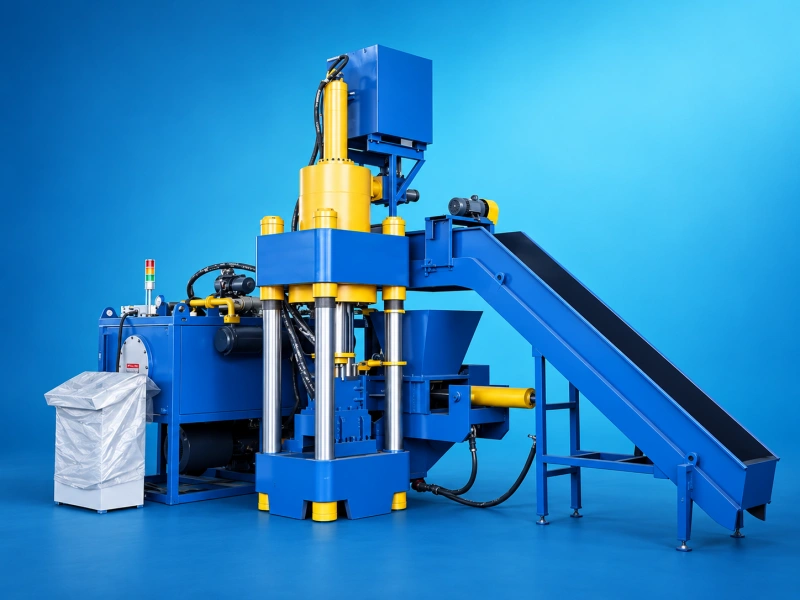
A precision-casting customer uses a vertical metal briquetting machine equipped with a liquid-collection structure to process aluminium chips. Under the customer’s actual material and operating conditions, project records show that approximately 4–5 tonnes of cutting oil per month can be recovered.

This operating record also shows that liquid collection during briquetting must be understood in relation to the actual material condition and operating conditions. Data from one project should not be treated as a universal result for all machines or materials.
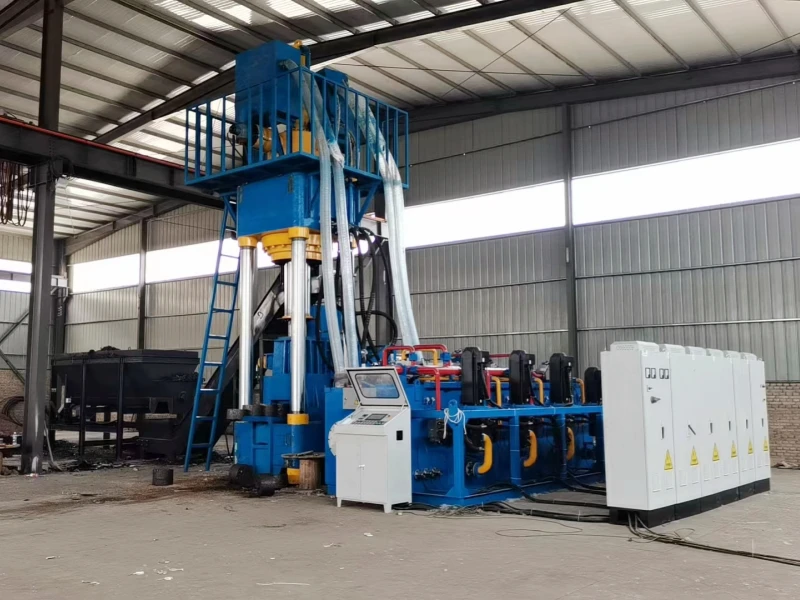
Aluminium Chip Processing Project in Uzbekistan
Material
Aluminium chips
Monthly Throughput
Approx. 80 tonnes
Cutting Oil Recovery
Approx. 4–5 tonnes/month

Hydraulic Control: The Key Is Not Only High Pressure, but Coordinating Pressure, Stroke, and Machine Actions

The hydraulic system provides the main pressing power for the machine, but its role is not limited to generating high pressure. The machine also needs to control the pressure, stroke, and action sequence of its hydraulic actuators at different stages so that feeding, pre-compression, main compression, pressure holding, decompression, briquette ejection, and return can operate according to the defined logic. A stable hydraulic briquetting process therefore involves several conditions: Whether the pressure reaches the required pressing state; Whether the actuators move to the correct positions; Whether the high-pressure condition can be maintained stably; Whether decompression and reversal proceed smoothly; Whether the actions of the different actuators are coordinated correctly. This is also why hydraulic system working pressure, main pressing force, and the specific compaction pressure acting on the material must not be treated as the same parameter. They describe different engineering quantities. For the final briquetting result, the goal is not to maximise one isolated number. What matters is matching the material condition, die dimensions, pressing conditions, and machine control. For the same reason, even when the same machine is used, metal chips of different materials, forms, and liquid conditions can produce different briquette densities and forming conditions. This leads to another separate question: what factors affect the final briquette density and forming quality?